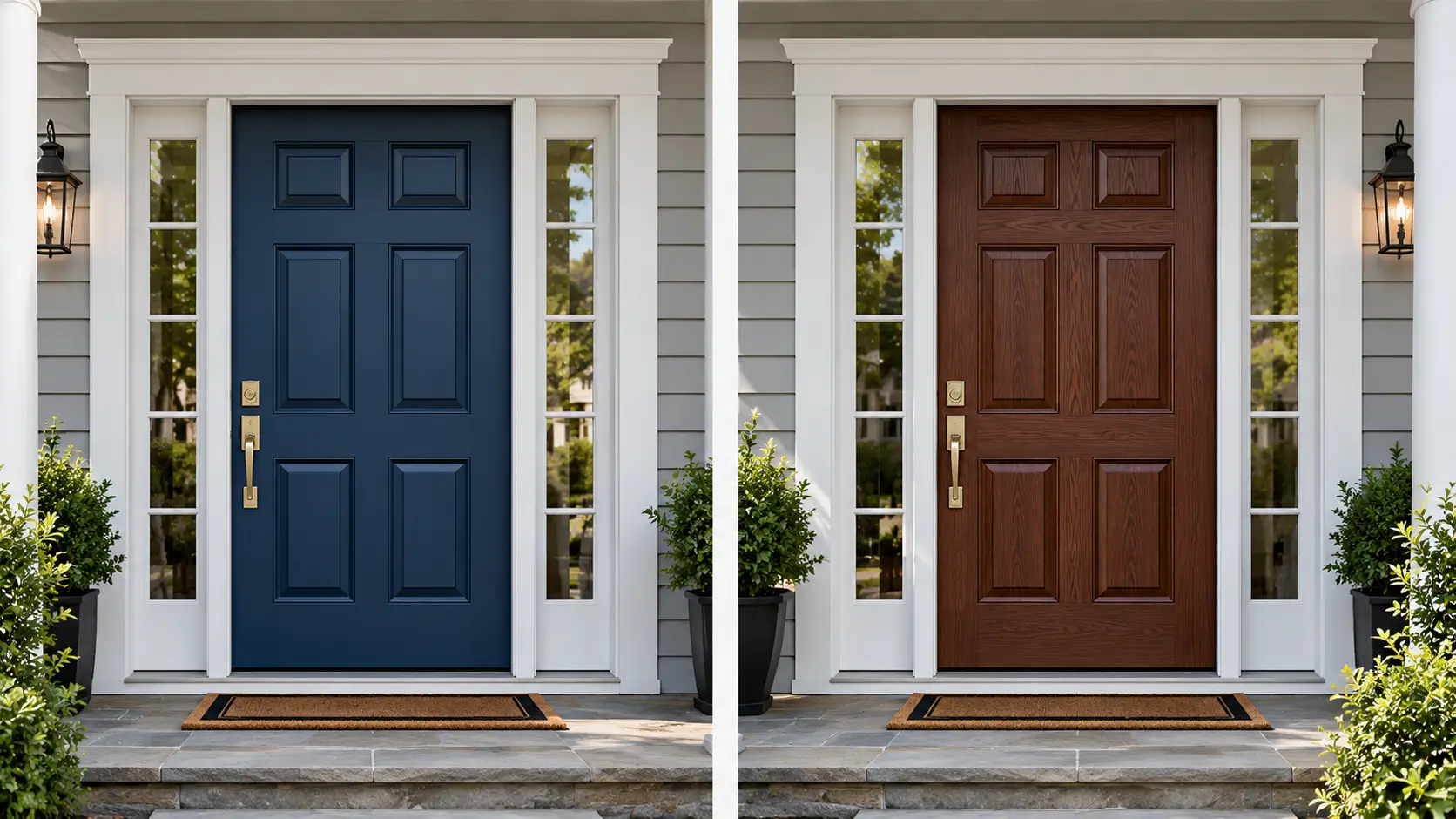
Your front entry door represents far more than a simple access point—it’s the focal point of your home’s exterior aesthetic, a critical component of energy efficiency, and a primary barrier protecting your family and belongings. When the time comes to replace an aging entry door, Massachusetts homeowners consistently face the same fundamental question: Should I choose fiberglass or steel?
Both materials have evolved dramatically over the past two decades. Modern manufacturing techniques have transformed steel doors from the utilitarian painted slabs of decades past into sophisticated, aesthetically pleasing entry systems. Similarly, fiberglass technology now delivers wood-like appearance and texture that previous generations couldn’t achieve. With over 20 years of construction experience and 8+ years specializing in door installation, First Light Windows and Doors has guided hundreds of Essex County homeowners through this decision—and the right answer depends entirely on your specific priorities, home characteristics, and lifestyle.
This comprehensive guide examines every critical factor in the fiberglass versus steel decision: insulation performance, durability in New England’s challenging climate, maintenance demands, design flexibility, cost considerations, and long-term value. By understanding how each material performs across these dimensions, you’ll make an informed choice that aligns with your home’s needs and your personal priorities.
Summary:
- Understanding the Core Differences Between Fiberglass and Steel
- Insulation Performance: Which Door Material Keeps Your Home Comfortable?
- Durability and Longevity in New England’s Climate
- Maintenance Requirements: Time and Cost Considerations
- Aesthetic Flexibility and Design Options
- Cost Analysis: Initial Investment and Long-Term Value
- Making Your Decision: Which Door Matches Your Priorities?
- FAQ: Fiberglass and Steel Entry Door Questions
Understanding the Core Differences Between Fiberglass and Steel
Before diving into specific performance characteristics, it’s essential to understand what distinguishes these materials at a fundamental level—both in composition and how those differences manifest in real-world door performance.
Steel entry doors consist of a steel skin (typically 24-gauge, though premium models use thicker 20-gauge) wrapped around a insulating foam core, usually polyurethane or polystyrene. The steel exterior provides structural rigidity and impact resistance, while the foam core delivers insulation value. Quality steel doors feature galvanized steel to resist rust, multiple coats of factory-applied paint or powder coating for weather protection, and steel or composite reinforcement in lock areas to prevent kick-in.
Fiberglass entry doors use compression-molded fiberglass skins over a similar insulating foam core. The fiberglass material can be textured to mimic wood grain with remarkable realism, making these doors particularly popular among homeowners seeking wood’s aesthetic without its maintenance demands. The fiberglass itself is inherently rust-proof and dimensionally stable, resisting warping even in extreme temperature swings.
Both door types require proper frames, weatherstripping, and quality locksets to perform optimally—the door slab itself represents only one component of an effective entry system. However, the core material choice influences multiple performance factors that affect daily living, long-term costs, and overall satisfaction with your investment.
Insulation Performance: Which Door Material Keeps Your Home Comfortable?
Energy efficiency ranks among homeowners’ top priorities when selecting entry doors, and rightfully so—a poorly insulated door creates drafts, increases heating and cooling costs, and compromises comfort near the entryway. Both fiberglass and steel doors dramatically outperform traditional wood doors, but measurable differences exist.
Fiberglass doors typically achieve R-values ranging from R-5 to R-7, with premium models reaching R-8 or higher. This insulation advantage stems from fiberglass material properties—the composite itself insulates better than steel, and fiberglass door construction allows for slightly thicker foam cores without compromising structural integrity. In practical terms, an R-7 fiberglass door provides approximately 15-20% better insulation than a comparable R-6 steel door.
Steel doors typically range from R-5 to R-6, with high-end models approaching R-7. While the steel skin itself conducts heat more readily than fiberglass, modern steel doors incorporate thermal breaks and edge-to-edge foam cores that minimize this thermal bridging effect. For most Massachusetts homeowners, an R-6 steel door delivers more than adequate insulation performance, particularly when professionally installed with proper weatherstripping and threshold seals.
The real-world impact of these R-value differences depends on multiple factors beyond the door itself. In a well-insulated home with efficient windows and adequate attic insulation, the incremental advantage of an R-7 versus R-6 door represents a modest portion of overall energy performance. However, in older homes where the entry door represents a relatively larger percentage of total heat loss, that difference becomes more meaningful.
For homeowners prioritizing maximum energy efficiency—particularly those in exposed locations or with entryways facing prevailing winter winds—fiberglass doors provide measurable advantages. For a detailed insulation comparison including specific R-value analysis and energy cost modeling, see our specialized deep-dive guide.
Durability and Longevity in New England’s Climate
Massachusetts’ climate tests exterior building materials relentlessly. Hot, humid summers. Freezing winters with snow, ice, and salt exposure. Coastal areas face additional challenges from salt air and higher moisture levels. Understanding how fiberglass and steel respond to these conditions helps predict long-term performance and replacement timelines.
Fiberglass doors resist weathering exceptionally well. The material won’t rust regardless of moisture exposure, making it ideal for coastal Essex County locations where salt air accelerates steel corrosion. Fiberglass also resists denting and won’t crack under impact (unlike wood), maintaining appearance even in high-traffic entryways or homes with active children. The material’s dimensional stability means fiberglass doors resist warping through seasonal temperature and humidity swings—a particular advantage in Massachusetts where July humidity and January cold create dramatic environmental contrasts.
Most quality fiberglass doors, when properly maintained, last 25-30+ years. The material itself doesn’t degrade significantly over time; rather, finish deterioration (if stained) or hardware wear typically drive eventual replacement. Homeowners who refinish stained fiberglass doors every 3-5 years can maintain like-new appearance for decades.
Steel doors also deliver impressive longevity but face specific vulnerabilities. Any chip or scratch that penetrates the protective coating and exposes bare steel to moisture can initiate rust—particularly problematic in coastal areas or climates with road salt exposure. Once rust starts, it spreads underneath surrounding paint, creating expanding damage that compromises both appearance and, eventually, structural integrity.
However, steel doors maintained proactively—with prompt touch-up of any finish damage and periodic inspection of weatherstripping—routinely last 20-30 years. The material’s impact resistance makes it virtually immune to denting, and properly coated steel resists fading better than some painted fiberglass models. For inland Massachusetts locations without significant salt exposure, well-maintained steel doors match fiberglass longevity.
Temperature cycling affects both materials but differently. Steel expands and contracts more dramatically with temperature swings, potentially affecting alignment over time if installation wasn’t precise. Fiberglass’s superior dimensional stability means properly installed doors maintain alignment better through decades of seasonal cycles.
Maintenance Requirements: Time and Cost Considerations
Long-term maintenance demands significantly impact total cost of ownership. While initial purchase price matters, the time and money required to maintain door appearance and performance over 20-30 years often exceeds that upfront investment.
Fiberglass doors demand minimal maintenance. Painted fiberglass requires only periodic washing with mild soap and water—the same maintenance you’d perform on siding or trim. The finish typically lasts 15-20 years before requiring repainting, and some homeowners never repaint their painted fiberglass doors during ownership.
Stained fiberglass requires more attention. To maintain the wood-like appearance that makes stained fiberglass attractive, refinishing every 3-5 years is recommended—similar to maintaining a real wood door but without concerns about rot or structural degradation. This refinishing involves light sanding, cleaning, and applying fresh stain and clear coat—a manageable DIY project or modest professional expense.
Steel doors require vigilant inspection and maintenance to prevent rust. Any finish damage—from impact, abrasion, or weathering—needs prompt attention. Touch-up paint application prevents exposed steel from rusting, but procrastination allows rust to establish and spread. Steel doors in harsh environments (coastal, high-traffic) benefit from annual inspection and preventive touch-up even if no obvious damage exists.
Repainting steel doors every 5-7 years maintains appearance and protective coating integrity. This involves surface preparation (cleaning, light sanding of any rust spots, priming bare areas), then applying quality exterior paint—more labor-intensive than fiberglass maintenance but still reasonable for most homeowners.
Hardware maintenance applies equally to both materials. Hinges, locksets, and weatherstripping require periodic adjustment, lubrication, and eventual replacement regardless of door material. Budget $100-200 every 5-7 years for hardware refresh and weatherstripping replacement to maintain optimal performance.
For homeowners prioritizing minimal-maintenance investments, fiberglass doors—particularly painted models—deliver clear advantages. For those comfortable with periodic proactive maintenance and vigilant touch-up of any finish damage, steel doors’ slightly higher maintenance demands remain manageable.
Aesthetic Flexibility and Design Options
Entry door appearance shapes your home’s curb appeal and sets the tone for visitor impressions. Both fiberglass and steel offer extensive design flexibility, but strengths differ.
Fiberglass doors excel at mimicking wood. Modern compression molding creates realistic wood grain textures that accept stain beautifully, delivering a wood door’s warmth and character without wood’s susceptibility to rot, warping, or insect damage. For homeowners who love wood aesthetics but reject wood’s maintenance demands, fiberglass entry doors offer exceptional versatility.
Stained fiberglass can replicate oak, mahogany, cherry, or fir grain patterns. When properly finished, many people can’t distinguish a quality stained fiberglass door from real wood at normal viewing distances. This aesthetic advantage makes fiberglass particularly popular for traditional home styles where wood doors complement architectural character.
Painted fiberglass doors deliver smooth, consistent surfaces that showcase clean lines favored in contemporary and modern home designs. The material accepts paint well and maintains finish quality for extended periods.
Steel doors traditionally featured smooth surfaces ideal for painted applications. While they can’t replicate wood grain texture like fiberglass, modern embossing techniques create subtle surface texture that adds visual interest to painted finishes. Steel doors work particularly well for minimalist, contemporary, or industrial aesthetic preferences where smooth painted surfaces align with design intent.
Both materials offer extensive configuration options: sidelights, transoms, decorative glass inserts (from privacy patterns to clear beveled designs), various panel configurations, and hardware finishes. The door material choice doesn’t significantly limit design configuration—both can accommodate virtually any layout preference.
Glass integration deserves specific mention. Both materials accommodate decorative glass equally well, but installation techniques differ slightly due to material properties. Quality manufacturers engineer both fiberglass and steel doors to support glass securely while maintaining insulation and weatherproofing.
Cost Analysis: Initial Investment and Long-Term Value
Budget realities influence most home improvement decisions. Understanding both upfront costs and long-term value helps homeowners evaluate which material delivers better overall financial return.
Steel doors typically cost 10-20% less than comparable fiberglass models. A quality steel entry door might range from $800-1,500 for the door slab alone (before installation), while equivalent fiberglass doors span $1,000-2,000. This price difference reflects manufacturing costs—steel processing is more established and materials are less expensive than fiberglass composites.
However, focusing solely on purchase price ignores total cost of ownership. Fiberglass’s lower maintenance requirements and superior longevity in Massachusetts’ climate—particularly coastal areas—often deliver better long-term value despite higher upfront cost.
Consider a 25-year ownership period: A steel door’s initial $300 savings may be offset by more frequent refinishing, rust repair costs, or earlier replacement due to corrosion damage. If a steel door requires replacement at year 20 while a fiberglass door continues performing well into year 30, the total cost calculation shifts dramatically in fiberglass’s favor.
Installation costs remain comparable—both materials require similar labor and expertise. Expect $300-600 for professional installation depending on project complexity, existing frame condition, and whether trim work or threshold replacement is needed. Our exterior door replacement services include complete installation with proper weatherproofing and alignment to ensure optimal long-term performance.
Energy savings represent another value consideration. Fiberglass doors’ slightly superior insulation may save $20-40 annually in heating costs compared to lower-R-value steel doors. Over 25 years, this $500-1,000 in cumulative savings narrows or eliminates the initial price gap.
Home value impact deserves mention: Both materials enhance home value compared to deteriorated wood doors, but high-end fiberglass doors with realistic wood grain may deliver incrementally higher perceived value in traditional home styles where wood aesthetics align with buyer expectations.
Making Your Decision: Which Door Matches Your Priorities?
Armed with comprehensive performance information, you can now align material choice with your specific situation, priorities, and home characteristics.
Choose fiberglass if you:
- Live in coastal areas where salt air accelerates steel corrosion
- Want wood aesthetic without wood maintenance demands
- Prioritize maximum energy efficiency (highest practical R-values)
- Prefer minimal-maintenance home improvement investments
- Plan long-term ownership (20+ years) where longevity matters more than initial cost
- Have a traditional home style where wood-grain aesthetic enhances curb appeal
Choose steel if you:
- Face tighter budget constraints and need to minimize upfront costs
- Don’t mind periodic maintenance and proactive rust prevention
- Prefer smooth painted finishes over wood-grain textures
- Live inland where rust risk is lower due to reduced humidity and no salt air exposure
- Want slightly lower material and replacement costs over a 15-20 year timeline
- Have contemporary home style where smooth painted surfaces align with design intent
Either material works well if you:
- Seek dramatic improvement over current deteriorated door
- Want professional installation ensuring proper weatherproofing and alignment
- Value quality manufacturer warranties backed by established brands
- Need standard configurations readily available from multiple manufacturers
- Prioritize security features (both materials support quality locksets and reinforcement)
No universally “best” choice exists—the right door material depends entirely on your specific situation. Homeowners in Salem or Beverly near the coast typically benefit more from fiberglass’s rust resistance, while those in inland Peabody or Wakefield might find steel’s cost advantage appealing without significant corrosion risk.
For personalized guidance based on your home’s location, style, and your specific priorities, schedule a consultation to evaluate your specific needs. Our team’s two decades of construction experience and specialized door expertise ensures you receive honest, transparent guidance—not sales pressure.
FAQ: Fiberglass and Steel Entry Door Questions
Which lasts longer—fiberglass or steel entry doors?
Both materials offer 20-30+ year lifespans with proper maintenance. Fiberglass resists rust and won’t dent, while steel doors can last decades if protected from moisture. In coastal Massachusetts environments, fiberglass typically shows less wear over time due to superior rust resistance.
Do fiberglass doors really look like wood?
Modern fiberglass door manufacturing has advanced significantly. High-quality fiberglass doors feature wood grain textures that closely mimic natural wood appearance, accept stain beautifully, and maintain that aesthetic without wood’s maintenance demands or susceptibility to weather damage.
Are steel doors better for security than fiberglass?
Both materials provide excellent security when properly installed with quality locksets and reinforced frames. Steel offers slightly higher impact resistance, but fiberglass doors with steel reinforcement in lock areas deliver comparable security. The difference is minimal for residential applications.
Will a steel door rust in Massachusetts weather?
Quality steel doors feature protective coatings and galvanized construction that resist rust effectively. However, any chips or scratches that expose bare steel to moisture can lead to rust over time. Regular inspection and touch-up maintenance prevents this issue in coastal climates.
Which door material provides better energy efficiency?
Fiberglass doors typically achieve slightly higher insulation values due to the material’s inherent thermal properties and ability to accommodate thicker foam cores. Both materials dramatically outperform wood doors for energy efficiency. For a detailed insulation comparison, see our in-depth analysis.
Can I paint both fiberglass and steel doors?
Yes, both accept paint well. Steel doors require proper surface preparation and quality exterior paint. Fiberglass doors can be painted or stained, offering more finishing flexibility—particularly valuable if you want a wood-like appearance with minimal maintenance.
Which door material offers better value for the price?
Steel doors typically cost 10-20% less initially than comparable fiberglass models. However, fiberglass’s lower maintenance requirements and superior longevity in humid/coastal environments often deliver better long-term value. Your specific climate, aesthetic preferences, and maintenance willingness should guide this decision.
How do I decide between fiberglass and steel for my home?
Prioritize your needs: If budget is primary and you don’t mind periodic maintenance, steel performs well. If you want minimal upkeep, superior insulation, and wood-like aesthetics, fiberglass typically justifies its higher cost. Consider Massachusetts’ coastal humidity and temperature swings when evaluating durability factors.