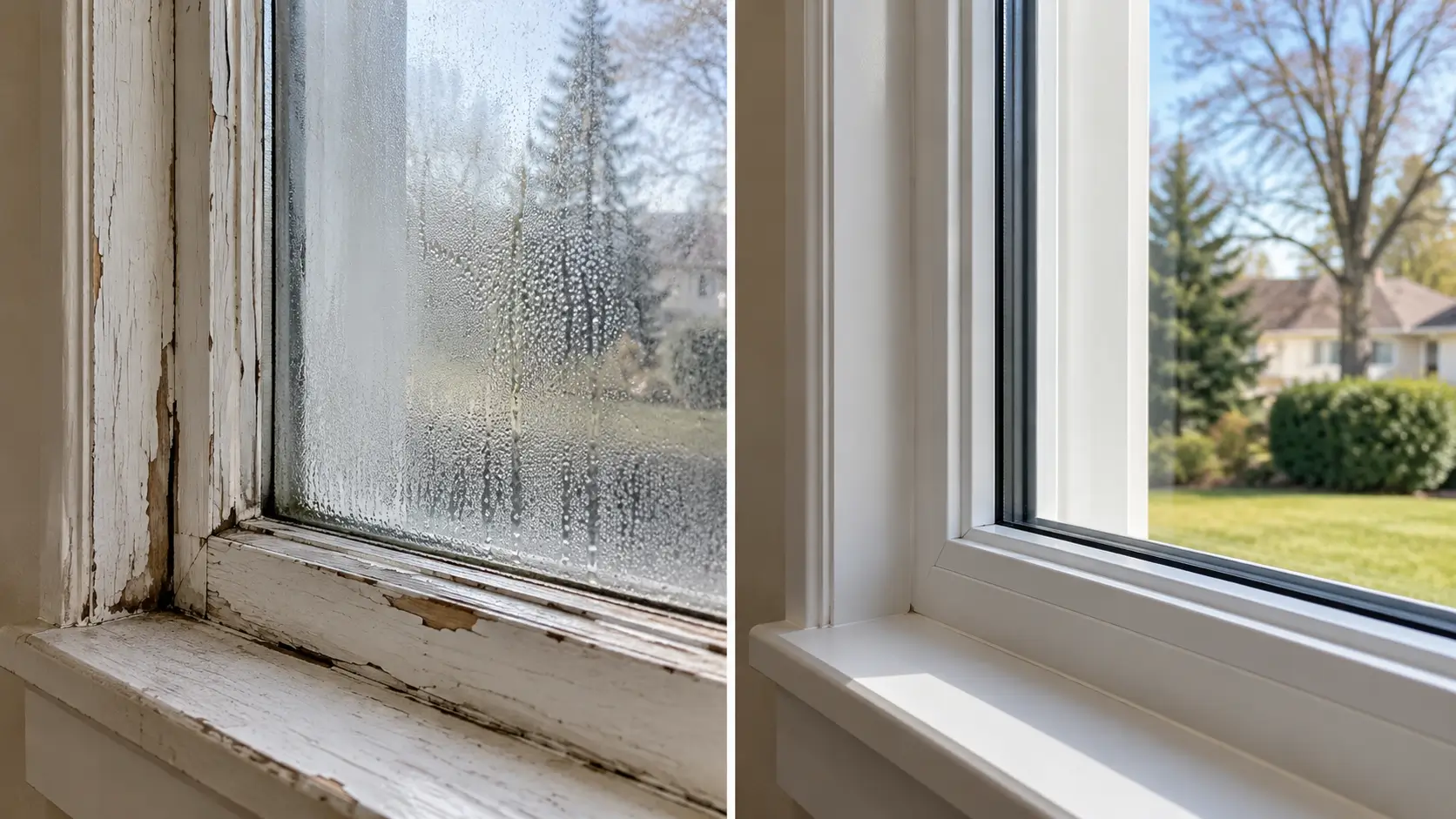
Your home’s windows serve as more than decorative elements or simple barriers against weather—they’re critical components of your home’s thermal envelope, security system, and overall comfort. Yet windows don’t fail dramatically like a burst pipe or dead furnace. Instead, they deteriorate gradually, often so slowly that homeowners adapt to declining performance without recognizing the cumulative impact on energy costs, comfort, and home value.
With over 20 years of construction experience and 8+ years specializing in window installation throughout Essex County, First Light Windows and Doors has evaluated thousands of aging window systems. Through this experience, we’ve identified the clear indicators that separate windows needing minor maintenance from those requiring complete replacement. Understanding these signs empowers you to make informed decisions about timing your investment for maximum value and minimum emergency pressure.
This guide examines ten definitive signs that your windows have reached the end of their functional life. Some indicators are obvious—visible rot or shattered seals. Others are subtle—gradual energy bill increases or slight operational difficulty. Together, these signs paint a complete picture of window health, helping you determine whether repair, maintenance, or replacement represents the right path forward for your Massachusetts home.
Summary:
- Why Recognizing Window Failure Matters
- Sign #1: Drafts and Air Leaks Around Window Frames
- Sign #2: Condensation Between Glass Panes
- Sign #3: Difficulty Opening, Closing, or Locking Windows
- Sign #4: Rising Energy Bills Despite Consistent Usage
- Sign #5: Visible Frame Damage, Rot, or Deterioration
- Sign #6: Outside Noise Intrusion
- Sign #7: Fading Furniture, Flooring, and Fabrics
- Sign #8: Window Frames That Are Painted Shut or Require Force
- Sign #9: Water Damage or Leaks Around Windows
- Sign #10: Your Windows Are Simply Old (20+ Years)
- When to Repair vs. When to Replace
- FAQ: Window Replacement Timing Questions
Why Recognizing Window Failure Matters
Procrastination might seem harmless when windows still technically function—they open (even if with difficulty), close (even if imperfectly), and keep out most weather (even if not all). However, delaying replacement when clear failure signs exist creates multiple compounding problems.
Energy waste represents the most immediate and measurable consequence. Failing windows allow conditioned air to escape continuously—heat during winter, cooled air during summer. This constant loss forces your HVAC system to work harder and run longer, driving up monthly utility bills. Over months and years, this wasted energy often exceeds the cost of window replacement itself.
Massachusetts’ climate intensifies energy loss impacts. Our heating season spans October through April—seven months annually when window performance directly affects comfort and costs. Even modest window failures that allow heat loss create measurable financial impact when multiplied across months and years.
Comfort degradation affects daily quality of life. Drafty windows create cold spots that make rooms uncomfortable despite adequate thermostat settings. Families compensate by raising temperatures or avoiding certain rooms during cold weather—neither representing acceptable solutions in homes you’ve invested significantly to own.
Moisture infiltration from failing window seals causes secondary damage far more expensive than window replacement. Water entering wall cavities from window leaks creates ideal conditions for mold growth and structural rot. This hidden damage often remains undetected until extensive repairs become necessary—repairs costing multiples of proactive window replacement.
Security vulnerabilities emerge as windows age. Locks that don’t engage properly, frames weakened by rot, and sashes that won’t close completely create entry points that compromise home security. The peace of mind value of properly functioning, securely locking windows justifies replacement even without energy cost considerations.
Recognizing failure signs early—before emergency situations develop—allows strategic planning. You can budget appropriately, research products thoroughly, select installation timing that suits your schedule, and choose from complete product lines rather than accepting whatever’s available for rushed emergency replacement.
Sign #1: Drafts and Air Leaks Around Window Frames
The sensation of air movement near closed windows represents the most common and recognizable window failure indicator. These drafts signal that your window’s weatherproofing system—seals, weatherstripping, and frame integrity—has deteriorated beyond effective function.
Test for drafts on cold, windy days. Hold your hand near window frames, sashes, and where windows meet when closed. Noticeable air movement, temperature differences, or the sensation of airflow indicates seal failure. Light a candle and move it slowly around window perimeter—flickering flames reveal air leaks invisible to touch alone.
Drafts originate from multiple sources. Weatherstripping compressed for years loses resilience and no longer seals effectively. Frames warp slightly through decades of temperature cycling, creating gaps where tight seals previously existed. Sash components wear, allowing movement between parts that should maintain constant contact. The cumulative effect creates air infiltration pathways that bypass the window’s insulating glass entirely.
Some homeowners attempt addressing drafts through new weatherstripping or caulking. While these measures sometimes help, they often provide only temporary relief when underlying structural issues—warped frames, deteriorated sashes, or failed seals—create the gaps. Professional assessment determines whether weatherstripping upgrades suffice or whether fundamental window failure necessitates replacement.
Consider the energy impact: A typical double-hung window with moderate air leakage can lose as much heat as leaving a 4-inch diameter hole open in your wall continuously. Multiply this by multiple failing windows and the cumulative energy waste becomes staggering—often representing 20-30% of total heating costs for homes with significantly failed window seals.
Massachusetts’ coastal humidity and temperature extremes accelerate weatherstripping deterioration compared to milder climates. Essex County homes face particularly demanding conditions—salt air exposure, significant seasonal temperature swings, and humidity variations that stress sealing materials. Windows in moderate climates might maintain effective seals for 25-30 years, while identical windows in Massachusetts coastal areas may fail after 15-20 years.
Sign #2: Condensation Between Glass Panes
Moisture appearing between double-pane or triple-pane window glass represents unambiguous seal failure requiring window replacement. Unlike exterior condensation (normal and harmless) or interior condensation (indicating humidity control needs), between-pane condensation signals that your window’s insulating capacity has been permanently compromised.
Double-pane and triple-pane windows create insulation through sealed airspaces between glass layers, often filled with argon or krypton gas for enhanced thermal performance. A perimeter seal maintains this airspace integrity for the window’s lifetime. When seals fail—through age, manufacturing defects, or structural stress—outside air infiltrates the sealed space, bringing moisture that condenses on interior glass surfaces.
This condensation creates several problems beyond aesthetic concerns. The escaped insulating gas cannot be replaced without complete window replacement, meaning your window now performs similar to single-pane glass—dramatically reducing R-value and increasing heat transfer. The trapped moisture between panes creates foggy, cloudy appearance that obscures views and cannot be cleaned from either interior or exterior surfaces.
The moisture itself can etch glass over time, permanently damaging the surface and making haziness persist even if moisture eventually evaporates during dry periods. This progressive deterioration only worsens, never improves.
Seal failure timing varies by window quality and installation conditions. Budget windows may fail within 5-10 years. Quality windows typically last 15-25 years before seal degradation. Premium windows with superior sealing systems occasionally exceed 30 years. Once failure occurs, however, repair is impossible—only replacement restores proper function.
Some companies market “defogging” services claiming to remove moisture between panes. While these services can temporarily clear fog, they cannot restore the insulating gas or repair the failed seal. Moisture returns, and the window remains functionally failed. Defogging represents temporary cosmetic improvement, not actual repair.
For homeowners discovering between-pane condensation, immediate replacement isn’t always necessary if other windows still function and budget constraints exist. However, understand that the affected window provides minimal insulation and plan replacement within 1-2 years to restore energy performance.
Sign #3: Difficulty Opening, Closing, or Locking Windows
Windows requiring excessive force to operate, binding during opening or closing, or locks that don’t engage properly indicate structural issues that typically necessitate replacement rather than simple repair.
Operational difficulty stems from several age-related failures. Wood frames and sashes absorb moisture and swell, then dry and contract repeatedly through decades of seasonal cycles. This dimensional instability gradually warps components, making smooth operation impossible. Balance systems in double-hung windows—springs, weights, or spiral balances—wear out, causing sashes to drop unexpectedly or require significant force to raise.
Vinyl and fiberglass frames, while more dimensionally stable than wood, still experience degradation. Frame welding weakens over time. Composite materials become brittle with age and ultraviolet exposure. Hardware components wear through tens of thousands of operation cycles over years.
Safety concerns emerge when windows don’t operate smoothly. Emergency egress from bedrooms requires quick, easy window opening—building codes mandate this specifically. Windows requiring two people, special tools, or excessive force fail this safety requirement. Windows that won’t stay open without props create injury risk if they unexpectedly close.
Security vulnerabilities develop when locks don’t fully engage. Partially engaging locks provide false security sense while remaining vulnerable to forced entry. Worn lock mechanisms allow unlocked windows to appear locked, creating security gaps homeowners may not recognize.
Some operational issues respond to simple repairs. Lubricating hinges, adjusting strike plates, or replacing worn balances sometimes restores function. However, widespread operational difficulty across multiple windows, problems that persist after professional adjustment attempts, or issues accompanied by other failure signs (drafts, seal failure, frame damage) typically indicate that repair costs approach replacement costs—making full replacement the better value proposition.
Professional assessment clarifies whether operational issues warrant repair or replacement. Our window replacement services include comprehensive evaluation helping you understand whether addressing current window issues makes economic sense or whether replacement delivers better long-term value.
Sign #4: Rising Energy Bills Despite Consistent Usage
Unexplained increases in heating or cooling costs—particularly when household occupancy and thermostat settings remain constant—often indicate deteriorating window performance among other potential efficiency losses.
Tracking energy costs over multiple years reveals patterns. Gradual bill increases beyond inflation rates and utility price adjustments suggest declining building envelope performance. While multiple factors contribute—aging HVAC systems, duct leakage, insulation settling—windows represent one of the largest potential heat loss pathways, particularly in older homes with original single-pane or early double-pane windows.
Massachusetts heating season energy consumption provides the clearest window performance indicator. Compare November-March heating bills year-over-year, adjusting for weather severity using heating degree days (available from National Weather Service). If adjusted consumption trends upward despite no changes in home usage or thermostat settings, building envelope failure—often windows—is the likely culprit.
Calculating window energy impact: Windows in poorly sealed frames can account for 25-30% of total heat loss in typical homes. Upgrading from failing single-pane or early double-pane windows to modern energy-efficient models typically reduces heating costs by 15-25%. For Massachusetts homeowners with $2,500 annual heating bills, that represents 375-625inannualsavings—7,500-15,000 over 20 years.
These savings must be weighed against replacement costs, but the equation often favors replacement when windows show multiple failure signs. The energy savings combined with comfort improvements, security enhancements, and eliminated maintenance needs create compelling return on investment.
Utility companies in Massachusetts sometimes offer energy audits identifying specific heat loss sources. These professional assessments use thermal imaging to visualize heat escape, often dramatically illustrating window performance failures invisible to naked eyes. Many utilities subsidize audit costs, making this objective window performance evaluation accessible and affordable.
For detailed analysis of how energy-efficient windows deliver measurable savings, including ROI calculations and payback period estimates, see our comprehensive cost-effectiveness guide.
Sign #5: Visible Frame Damage, Rot, or Deterioration
Physical damage to window frames—rot, cracks, warping, or deterioration—represents unambiguous replacement indicators, particularly when damage affects structural integrity or water resistance.
Wood frame rot typically begins subtly. Slight discoloration, minor swelling, or surface texture changes precede obvious structural damage. Probe suspected areas with a screwdriver—soft spots indicate rot penetration requiring replacement. Extensive rot compromises frame structural capacity to support glass weight and maintain weatherproof seals.
Water damage around windows manifests through multiple signs. Paint blistering or peeling on interior trim suggests moisture infiltration. Staining on walls above or below windows indicates water running down from failed seals. Actual water pooling on sills during rain confirms that weatherproofing has catastrophically failed.
Vinyl frame deterioration appears as chalking (powdery residue from UV degradation), brittleness, or cracking—particularly at welded corners. While vinyl resists rot and moisture damage better than wood, decades of ultraviolet exposure eventually degrades the material beyond effective function.
Aluminum frame corrosion, though less common in modern windows with protective finishes, sometimes develops in coastal environments. White powdery oxidation or visible pitting indicates advanced corrosion that can compromise frame strength and seal integrity.
Frame damage severity determines repairability. Minor issues—small rot spots caught early, single cracked frame members, or isolated seal gaps—sometimes allow spot repairs that extend window life 3-5 years. Extensive damage, multiple affected areas, or structural compromise necessitates full replacement as repair costs approach or exceed replacement costs while delivering inferior results.
Homeowners sometimes rationalize delaying replacement when damage appears cosmetic. However, visible exterior damage almost always indicates more extensive hidden damage. Water that creates visible rot on interior sill has typically penetrated wall cavities, potentially damaging structural framing invisible without demolition.
Professional inspection identifies damage extent and provides realistic assessment of repair versus replacement value. With 20+ years construction experience, our team recognizes the subtle signs distinguishing minor repairable damage from structural failures requiring replacement.
Sign #6: Outside Noise Intrusion
Increased noise from traffic, neighbors, or environmental sources penetrating your home despite closed windows indicates failed seals or inadequate glazing—issues modern windows address effectively.
Sound transmission through windows occurs via multiple pathways. Air gaps from failed weatherstripping allow direct sound transmission—closing gaps that let air through simultaneously blocks noise. Glass itself transmits vibration, with single-pane windows offering minimal sound dampening. Older double-pane windows with thin glass and narrow airspaces provide modest improvement but can’t match modern acoustic-rated windows.
Urban and suburban Massachusetts homeowners particularly notice noise intrusion. Homes near Route 128, I-95, or busy secondary roads experience constant traffic noise. Properties near Logan Airport flight paths deal with aircraft noise. Even suburban neighborhoods with school bus routes, lawn maintenance, or typical vehicular traffic generate surprising sound levels that quality windows should mitigate.
Modern double-pane windows reduce noise transmission significantly compared to single-pane units—typically 20-30% reduction. Windows specifically designed for noise control, using laminated glass and optimized airspaces, achieve 40-50% noise reduction. For detailed information on sound control benefits, see our guide explaining why double-pane windows reduce noise transmission alongside energy benefits.
The quality-of-life impact of noise reduction proves difficult to quantify but significantly affects daily comfort. Ability to sleep without traffic noise intrusion, conduct video calls without background sound, or simply enjoy quiet relaxation in your home justifies window investment even without energy cost considerations.
Testing current window noise performance: Close all windows and note ambient noise levels. Open windows briefly, then close again—if noise levels don’t decrease dramatically when windows close, seals have failed or glazing is inadequate. Quality windows should create immediate, obvious noise reduction when closed.
Noise intrusion often worsens gradually as seals deteriorate, making homeowners adapt without recognizing the cumulative impact. Experiencing modern windows’ sound dampening after years of failed seals often surprises homeowners who’d forgotten how quiet homes can be.
Sign #7: Fading Furniture, Flooring, and Fabrics
Ultraviolet radiation penetrating windows causes fading and deterioration of interior furnishings, flooring, and fabrics—damage that modern low-E glass prevents while older windows allow freely.
UV damage manifests gradually. Furniture fabrics near windows lose color vibrancy, often with distinct lines between exposed and protected areas. Hardwood flooring develops uneven coloration where sun exposure varies. Artwork and photographs fade despite being indoors. Carpet shows distinct wear patterns aligned with sun exposure rather than foot traffic.
Single-pane and early double-pane windows offer minimal UV protection—typically blocking only 25-40% of ultraviolet radiation. Modern low-E coated windows block 95-99% of UV while still transmitting visible light, protecting interiors without creating dark, dim spaces.
The financial impact extends beyond energy costs. Replacing faded furniture, refinishing floors, or reframing artwork costs thousands—often more than window replacement. Preventing this damage through modern UV-blocking windows protects investments you’ve already made in home furnishings.
Massachusetts’ relatively northern latitude means lower sun angle during winter months, creating deeper sun penetration into homes compared to summer. South and west-facing windows particularly impact interiors, with winter sun reaching 15-20 feet into rooms. Windows throughout your home affect UV exposure, not just those receiving direct summer sun.
If you notice significant fading near windows despite curtains or blinds, your windows lack adequate UV protection. This represents one of multiple performance deficiencies indicating replacement value—UV protection combines with energy efficiency, noise reduction, and security improvements to justify investment.
Some homeowners install window films adding UV protection to existing windows. While films help, they can’t address other window failure signs—drafts, seal failure, or operational issues. Films cost $5-15 per square foot installed, with typical home treatment running $800-2,000. This significant expense delivers single-benefit improvement while full window replacement addresses all performance deficiencies simultaneously.
Sign #8: Window Frames That Are Painted Shut or Require Force
Windows painted shut or requiring excessive force to operate represent serious safety and functionality issues that typically necessitate replacement rather than simple paint removal.
Painted-shut windows develop through layers of paint accumulated over decades. Each repainting adds thickness, eventually sealing sash-to-frame joints. While careful paint removal sometimes frees windows, decades-old paint—particularly pre-1978 paint potentially containing lead—requires professional lead-safe removal procedures that cost nearly as much as replacement.
Moreover, windows painted shut for years often have deteriorated beyond simple operation restoration. Weatherstripping has degraded, balance systems have failed, and wood components have absorbed moisture and warped. Freeing painted-shut windows frequently reveals they no longer function properly even when operable.
Safety codes require bedroom windows to serve as emergency egress routes. Painted-shut or difficult-operating windows fail this life-safety requirement. During fires or other emergencies, seconds matter—windows requiring tools, excessive force, or multiple people to operate don’t provide adequate emergency exits.
Windows requiring significant force to operate indicate problems beyond simple paint—warped frames, failed balances, or deteriorated components that won’t improve with lubrication or minor repairs. Continuing to force windows risks breaking glass, damaging frames, or creating safety hazards when windows unexpectedly release.
If multiple windows require force or won’t open, systematic failure has occurred. Rather than attempting individual repairs that may provide only temporary improvement, replacement addresses underlying issues while upgrading energy performance, security, and aesthetics simultaneously.
Professional evaluation determines whether painted-shut windows justify restoration efforts or whether replacement provides better value. Our experience suggests that windows requiring paint removal to operate, particularly when combined with other failure signs, rarely justify restoration costs versus replacement benefits.
Sign #9: Water Damage or Leaks Around Windows
Water infiltration around windows—evidenced by staining, rot, mold, or actual leaks during rain—indicates catastrophic seal failure requiring immediate attention to prevent extensive structural damage.
Water damage appears in multiple forms. Interior wall staining above or below windows indicates water running down from failed head or sill seals. Peeling or bubbling paint around window trim suggests moisture trapped behind surfaces. Visible mold growth signals chronic moisture problems creating health hazards alongside structural concerns.
During heavy rain, actually observing water entering around windows confirms severe weatherproofing failure. Even small amounts of visible water indicate that larger volumes have penetrated wall cavities invisibly, potentially causing hidden structural damage.
Water damage consequences extend far beyond window function. Moisture in wall cavities creates ideal conditions for mold growth—health hazards requiring professional remediation. Water deteriorates structural framing, insulation, and sheathing, creating damage costs far exceeding window replacement. These secondary damages amplify the urgency of addressing window failures rather than deferring replacement.
Massachusetts’ climate—significant precipitation, freeze-thaw cycles, and coastal humidity—accelerates water damage when window seals fail. What might remain minor annoyance in dry climates becomes structural threat in New England’s moisture-rich environment.
Emergency temporary repairs—additional caulking, tarps, or interior protection—sometimes buy time when immediate replacement isn’t possible. However, these measures only delay inevitable replacement while allowing continued hidden damage accumulation. Permanent resolution requires replacing failed windows with properly sealed, correctly installed units.
Professional installation quality determines long-term water resistance as much as product specifications. Our window replacement services emphasize flashing, waterproofing, and seal integrity because we recognize that perfect products installed improperly still fail, while quality products professionally installed deliver decades of weathertight performance.
Sign #10: Your Windows Are Simply Old (20+ Years)
Age alone justifies considering replacement even when windows technically still function, particularly for windows exceeding 20-25 years old—the typical lifespan for residential windows depending on quality and maintenance.
Window technology has advanced dramatically over the past two decades. Windows manufactured in 2000-2006 lack features now standard: advanced low-E coatings, argon gas fills, warm-edge spacers reducing thermal bridging, multi-chamber frame designs improving insulation, and modern weatherstripping systems maintaining effectiveness longer.
Energy code evolution reflects these improvements. Modern windows achieve U-factors of 0.25-0.30, while windows from 20 years ago typically ranged from 0.35-0.50—40-60% less efficient. This efficiency gap translates directly to energy costs over windows’ remaining life.
Homeowners with 20+ year-old windows contemplating 10-20 more years of homeownership should evaluate replacement’s long-term value. Those cumulative years of improved energy efficiency, enhanced comfort, better security, and eliminated maintenance often justify proactive replacement versus waiting for catastrophic failure.
Consider also that older windows likely show multiple minor failures—slight drafts not quite serious enough alone to justify replacement, moderate difficulty operating that you’ve adapted to, or minor seal failures affecting only some panes. Individually these seem manageable; collectively they indicate systematic deterioration.
Replacement timing around other home improvement projects sometimes makes strategic sense. If you’re repainting exteriors, re-siding, or doing other exterior work, coordinating window replacement leverages mobilization costs and allows integrated weatherproofing between windows and adjacent wall systems.
Age-based replacement doesn’t mean rush to judgment. Well-maintained premium windows sometimes deliver 30+ years of service. However, at 20+ years, seriously evaluate whether your windows’ remaining functional life and declining performance justify continued use versus replacement benefits.
When to Repair vs. When to Replace
Understanding when repairs suffice versus when replacement represents better value helps homeowners make economically rational decisions rather than defaulting to either extreme—replacing functional windows prematurely or attempting futile repairs on fundamentally failed units.
Consider repair when:
- Single isolated issue exists (one broken pane, damaged weatherstripping, worn hardware)
- Windows are relatively young (<10-15 years) and otherwise functional
- Repair costs less than 30% of replacement cost
- Frame and structure remain sound with no rot or warping
- Energy performance remains adequate for your needs and budget
- Only cosmetic issues exist (scratched glass, finish wear, dated appearance)
Choose replacement when:
- Multiple failure signs exist across several or all windows
- Windows exceed 20 years old with any significant issues
- Repair costs approach 40%+ of replacement cost
- Structural damage, rot, or warping affects frames
- Seal failure creates between-pane condensation
- Energy performance has declined noticeably
- Safety or security concerns exist
The decision sometimes involves judgment calls where neither answer is definitively right. Professional assessment provides objective evaluation removing emotional attachment to existing windows while offering realistic cost-benefit analysis.
Consider total cost of ownership beyond initial repair price. Repairs that extend window life 3-5 years cost less initially than replacement but may require additional repairs during that period and still necessitate eventual replacement. Replacement costs more initially but delivers 20-30 years of trouble-free service, improved energy performance, and modern features.
Factor in opportunity costs. Time spent managing ongoing window problems—arranging repairs, dealing with drafts and discomfort, higher energy bills—has value. Replacement eliminates these ongoing concerns, freeing your attention for more productive or enjoyable activities.
For borderline situations, phased replacement sometimes makes sense. Replace windows showing the most severe failures immediately while maintaining adequate windows another 2-5 years. This spreads costs while prioritizing worst performers.
Ready to determine whether your windows need replacement? Schedule a professional window assessment for expert evaluation and transparent guidance based on your home’s specific condition and your priorities.
FAQ: Window Replacement Timing Questions
How do I know if my windows are actually failing or just need cleaning?
Functional issues like drafts, difficult operation, or condensation between panes indicate structural failure that cleaning can’t fix. Cosmetic issues like dirty glass, dusty tracks, or smudged frames respond to cleaning. If problems persist after thorough cleaning and basic maintenance, replacement is likely necessary.
Can I replace just one or two windows, or should I do them all?
You can replace individual windows, but whole-home replacement offers better value through economies of scale and ensures consistent appearance and performance. If budget requires phasing, prioritize windows showing the most severe failure signs—particularly those facing prevailing winds or with visible water damage.
How long should windows last before needing replacement?
Quality windows typically last 20-30 years with proper maintenance. Single-pane windows often fail sooner (15-20 years). Premium windows with superior materials and professional installation can exceed 30 years. Age alone doesn’t necessitate replacement—performance indicators matter more than arbitrary timelines.
Will new windows really reduce my energy bills noticeably?
Yes, particularly when replacing single-pane or early double-pane windows. Massachusetts homeowners typically see 15-25% reduction in heating and cooling costs after window replacement. Actual savings depend on replaced windows’ condition, new windows’ specifications, and your home’s overall energy performance. Learn how energy-efficient windows deliver measurable savings.
Is condensation between window panes a major problem or just cosmetic?
It indicates seal failure—a significant problem. The argon gas that provides insulation has escaped, and moisture has infiltrated between panes. This dramatically reduces energy performance and cannot be repaired—only full window replacement restores proper function.
Can drafty windows be fixed with new weatherstripping?
Sometimes, if the frame and sash are structurally sound. However, drafts often indicate warped frames, deteriorated sash, or failed seals that weatherstripping can’t address. A professional assessment determines whether weatherstripping helps or replacement is necessary.
Should I replace windows before selling my home?
If windows show obvious failure signs, replacement typically returns 70-80% of cost in increased home value plus improves marketability. Buyers notice drafts, difficult operation, and visible damage during showings. If windows function adequately, replacement purely for sale purposes offers lower ROI than other improvements.
What’s the best time of year to replace windows in Massachusetts?
Fall (September-November) and spring (April-June) offer ideal conditions—moderate temperatures for proper sealant curing and comfortable installation. Summer works but creates temporary heat exposure. Winter replacement is possible but less ideal. Fall installation prepares your home for heating season.