How to Choose the Right Windows for Your Space
Choosing the Right Windows for Your Home
The windows you pick shape your home’s look, comfort, and energy use. This guide focuses on energy efficiency, durability, and style so homeowners in Beverly, MA can compare options, find the best fit, and budget for both installation and long‑term value.
Key Takeaways
- Double‑ or triple‑pane, energy‑efficient windows boost insulation and are well suited to Beverly, MA’s climate.
- Frame materials—vinyl, wood, and fiberglass—differ in durability, upkeep, and appearance, all of which affect long‑term performance.
- Window styles such as casement, double‑hung, and bay change ventilation, daylighting, and room character.
- Use U‑Factor, Solar Heat Gain Coefficient (SHGC), and ENERGY STAR ratings to compare energy performance objectively.
- Installation costs vary by window type, size, complexity, and local labor—factor these into your budget.
- Regular maintenance, like cleaning and seal checks, preserves efficiency and extends service life.
- Warranties cover material and workmanship issues; check labor coverage and transferability before you buy.
- Balance thermal performance, style, budget, and professional installation to get windows that last and perform.
What Are the Best Window Types for Homes in Beverly MA?
In Beverly, prioritize energy‑efficient windows that suit the local climate. Double‑ and triple‑pane glazing reduce heat loss; vinyl windows are a common choice for low maintenance and cost effectiveness. Think about appearance as well as performance when choosing.
- Double-Pane Windows: Two glass layers with an insulated gap to cut heat transfer.
- Triple-Pane Windows: An extra pane for better insulation where higher performance is needed.
- Vinyl Windows: Durable, low‑maintenance frames with solid insulating properties.
Pick the type that best balances insulation, cost, and your home’s style.
How Do Different Window Materials Affect Durability and Appearance?
Frame material determines longevity, required upkeep, and the window’s look. Vinyl, wood, and fiberglass each come with trade‑offs in cost, maintenance, and aesthetic appeal.
- Vinyl Windows: Moisture resistant, easy to care for, and available in multiple colors and finishes.
- Wood Windows: Offer a classic look but need painting or sealing to prevent rot and warping.
- Fiberglass Windows: Sturdy and dimensionally stable; they can mimic wood without the same maintenance needs.
Choose a frame material that fits the maintenance level you’re comfortable with and the look you want.
Research highlights why material choice matters: it compares embodied energy, durability, and long‑term performance across frame types.
Window Frame Materials, Durability, and Energy Performance
Life‑cycle assessments (LCAs) for windows look at two main points: the environmental impact of manufacturing different frame materials and whether any higher manufacturing impact is offset by better in‑use performance. In LCAs that compared frame materials, wood often showed lower embodied energy than options like PVC and aluminum. Modern frame systems—PVC, aluminum‑clad wood, and fiberglass—tend to have similar cradle‑to‑gate emissions; a life‑cycle edge usually comes from a longer service life and fewer replacements over time.
A review of life-cycle assessment of windows, T Sowlati, 2008
Which Window Styles Suit Living Rooms and Other Residential Spaces?
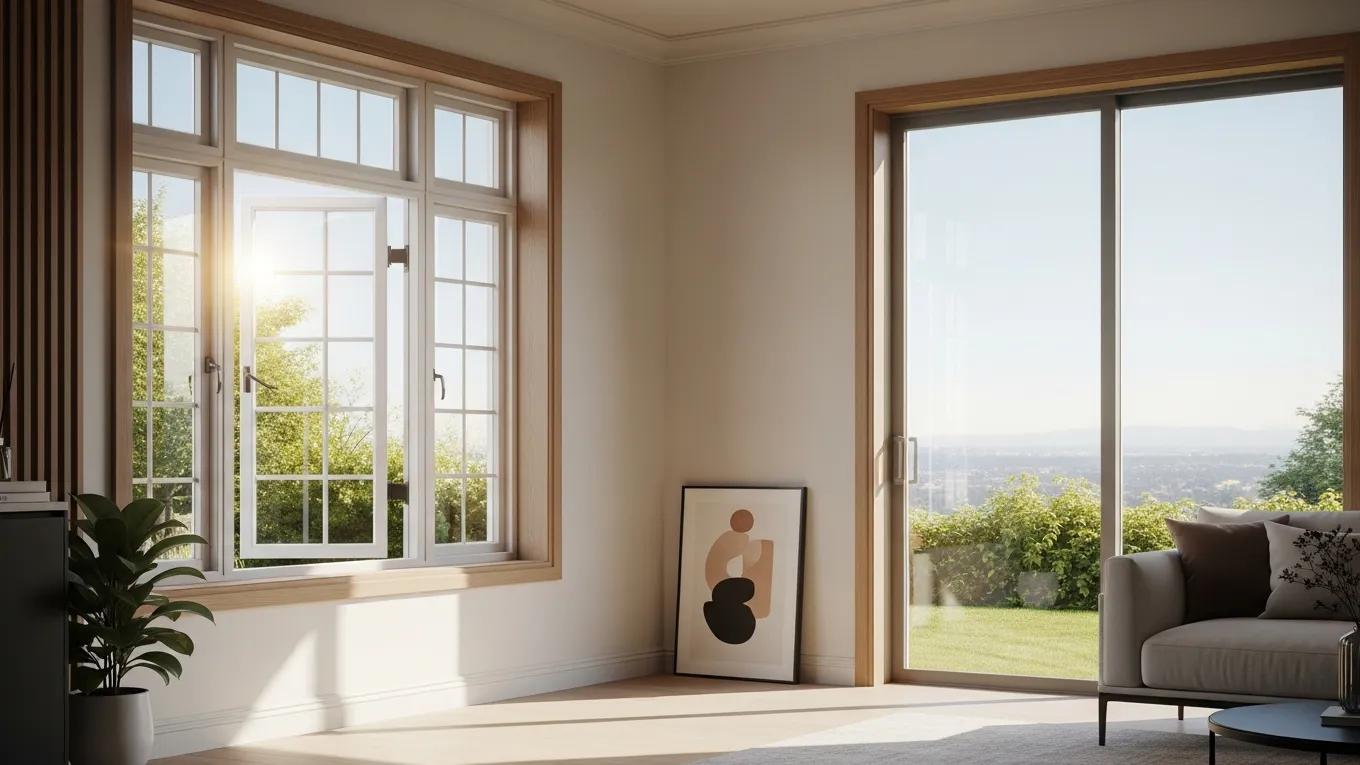
Style affects daylight, ventilation, and view. Match the window’s function to the room’s use and character.
- Casement Windows: Swing outward for strong ventilation and unobstructed sightlines.
- Double-Hung Windows: Two operable sashes for flexible airflow and easier cleaning.
- Bay and Bow Windows: Project outward to add light and create a seating or display nook.
Choose styles that support the room’s use, lighting needs, and curb appeal.
How to Evaluate Energy Efficient Windows for Your Home
Compare windows with standard performance metrics so your choices deliver measurable comfort and savings.
- U-Factor: Lower values mean better insulation.
- Solar Heat Gain Coefficient (SHGC): Lower SHGC reduces solar heat gain—consider orientation when choosing.
- ENERGY STAR Certification: Shows products tested to meet regional efficiency standards.
Use these metrics alongside frame and glazing options to match performance to climate and budget.
What Energy Efficiency Ratings Should Homeowners Consider?
Check U‑Factor, SHGC, and ENERGY STAR listings for your region. These figures let you compare models objectively and choose glazing and frames that meet your goals.
- U-Factor: Favor lower numbers for better insulation.
- SHGC: Pick lower SHGC for sun‑exposed rooms in summer‑hot orientations.
- ENERGY STAR Certification: A practical shorthand for region‑appropriate performance.
Weigh these ratings against cost and appearance to find the right balance.
How Do Window Materials Impact Energy Savings?
Frames and glazing both influence heat flow. Vinyl and fiberglass frames insulate well; low‑E coatings and multiple panes reduce conductive and radiative heat transfer.
- Vinyl Windows: Insulating frames that help lower heating and cooling demand.
- Fiberglass Windows: Stable in changing temperatures with strong thermal performance.
- Wood Windows: Visually appealing but typically need treatments or upgraded glazing for top efficiency.
Combine frame and glazing choices to meet your efficiency targets and maintenance preferences.
What Are the Typical Window Installation Costs in Beverly MA?
Installation costs vary by product, size, and complexity. Expect a wide range depending on window type and whether structural changes or custom sizes are required.
- Standard Vinyl Windows: Generally lower cost and common in residential replacements.
- Wood Windows: Higher material and finish costs, which increase the price.
- Specialty Windows: Custom shapes, large sizes, and unique finishes add significantly to cost.
Collect detailed quotes that spell out what’s included—removal, disposal, trim, and warranty—so you can budget accurately.
Which Factors Influence the Cost of Window Installation?
Costs depend on window type, installation complexity, and local labor rates. Ask contractors about allowances for finishes and any hidden repairs.
- Type of Window: Materials and glazing choices affect price.
- Installation Complexity: Structural work or hard‑to‑reach locations raise labor time and cost.
- Local Labor Rates: Regional differences in labor directly impact total price.
Obtain multiple bids that list materials, labor, and warranty so you can compare offers fairly.
How to Budget for Quality Windows and Professional Installation?
Plan for the purchase price, installation, and small contingencies so you avoid surprises.
- Research Costs: Get several quotes and compare specifications, not just the bottom line.
- Consider Long-Term Savings: Higher‑efficiency windows can cut utility bills over time.
- Plan for Additional Expenses: Include permits, trim work, or repairs uncovered during installation.
A clear scope and a written estimate protect your budget and timeline.
Further studies and cost simulations can help show the long‑term value of energy‑efficient choices.
Energy Star Window Cost Simulation for Homes
The simulation asks the user to specify the number of windows and doors and whether they will be ENERGY STAR certified.
A publicly available cost simulation of sustainable construction options for residential houses, L Fulton, 2020
How to Maintain and Extend the Life of Your Windows
Regular care keeps windows performing: clean glass and frames, inspect seals, and repair small issues before they grow.
- Regular Cleaning: Wipe frames and glass periodically to prevent buildup.
- Inspect Seals: Reseal gaps to prevent drafts and moisture intrusion.
- Prompt Repairs: Fix hardware or glazing problems early to avoid bigger replacements.
Routine checks help preserve service life and energy performance.
What Are the Recommended Maintenance Practices for Different Window Types?
Adjust maintenance to the material to prevent damage and keep windows looking their best.
- Vinyl Windows: Clean with mild soap and water; avoid harsh abrasives.
- Wood Windows: Watch for rot and repaint or reseal when needed.
- Fiberglass Windows: Clean gently and inspect seals on a regular schedule.
Follow the manufacturer’s care instructions for specific products and timelines.
How Do Warranties Protect Your Investment in Windows?
Warranties cover material and workmanship issues and can reduce out‑of‑pocket repair costs. Read the fine print for limits and transfer rules.
- Coverage for Defects: Look for details on seals, frames, and glazing coverage.
- Labor Coverage: Confirm whether labor for repairs or replacements is included.
- Transferability: Transferable warranties can add value when selling your home.
Ask for warranty documents with any quote and note required maintenance to keep coverage valid.
For more information or to schedule a consultation, contact us today.
What factors should I consider when choosing window styles for different rooms?
Think about function (ventilation, view, privacy), daylight needs, and room style. Kitchens often work well with operable casements, living rooms benefit from larger fixed or bay units, and bathrooms may need privacy glass.
How can I improve the energy efficiency of my existing windows?
Seal gaps with caulk or weatherstripping, add insulating window film or cellular shades, and consider storm windows or selective replacement where savings justify the expense.
What are the benefits of ENERGY STAR certified windows?
ENERGY STAR windows meet regional efficiency standards, which typically reduce heating and cooling demands, improve comfort, and may qualify you for rebates or incentives.
How often should I inspect my windows for maintenance?
Inspect windows at least twice a year—spring and fall—to check seals, hardware, and glass condition so you can fix small problems early.
What should I do if I notice condensation between window panes?
Condensation between panes means a seal has likely failed. Ask a professional to diagnose the issue; options include resealing, replacing the insulated glass unit, or replacing the entire window depending on severity.
Are there any eco-friendly window options available?
Yes—look for frames with recycled content or sustainably sourced materials and low‑E glazing. Manufacturer sustainability claims and certifications help identify greener choices.
What is the average lifespan of different window types?
Lifespans vary: vinyl commonly lasts 20–40 years, wood 15–30 years with regular maintenance, and fiberglass 30–50 years. Proper care extends any window’s service life.
Frequently Asked Questions
What are the key energy efficiency features to look for in windows?
Focus on U‑Factor, which measures insulation, and SHGC, which shows how much solar heat passes through. Look for low U‑Factor for better insulation and lower SHGC for sun‑exposed rooms. Multiple panes and low‑E coatings also significantly improve energy performance and comfort.
How do I choose the right window size for my space?
Consider both form and function. Measure the wall opening and think about how much natural light and ventilation you want. Larger windows increase views and daylight, while smaller windows may offer privacy and better energy performance. Consult a pro to confirm fit and installation requirements.
What are the common signs that my windows need replacement?
Signs include drafts, condensation between panes, difficulty opening or closing, and visible damage like cracks or rot. Higher energy bills or discomfort can also indicate failing windows. Regular inspections help catch issues early.
Can I install windows myself, or should I hire a professional?
Some homeowners attempt DIY installation, but hiring a professional is usually recommended. Proper installation ensures correct fit, sealing, and code compliance, avoiding future energy loss or damage. If you go DIY, be sure you have the right skills and tools.
What maintenance practices can extend the life of my windows?
Clean frames and glass regularly, check seals for gaps, and address repairs promptly. Follow care instructions by material—vinyl with mild soap, wood with periodic sealing or painting. Twice‑yearly inspections help prevent small issues from growing.
Are there financing options available for window replacement projects?
Yes. Many manufacturers and contractors offer financing, such as payment plans, low‑interest loans, or promotional offers. Energy‑efficient windows may also qualify for rebates or tax incentives. Ask about financing when you request quotes.
What should I consider when selecting window colors and finishes?
Match colors and finishes to your home’s architecture and surroundings, and consider maintenance—darker colors may show wear faster. Some finishes can also affect heat reflection. Check with manufacturers for available options and how they impact performance.
Choosing the right windows improves comfort, appearance, and long‑term energy costs. Balance frame material, glazing, style, and budget, and use professional installation plus clear warranties to protect your investment. For tailored advice, contact us.
Conclusion
The right windows boost comfort, curb appeal, and energy efficiency. By weighing frame materials, glazing, and styles against your budget—and by using professional installation and solid warranties—you’ll make a choice that delivers lasting value. For personalized guidance on the best windows for your home, contact us today.