Your exterior doors stand as the primary barrier between your family and potential threats. Statistics consistently show that over 34% of burglars enter through front doors—making door security one of the most critical home protection investments you can make. Yet many Massachusetts homeowners focus exclusively on aesthetics or energy efficiency while overlooking essential security features that determine whether their doors truly protect or simply present an attractive facade.
With over 20 years in construction and 8+ years specializing in door installations, First Light Windows and Doors has helped countless homeowners understand the security implications of their door choices. Not all entry doors provide equivalent protection, and the differences between basic and high-security configurations can mean the difference between a successful deterrent and an easy target.
This guide examines the essential security features that belong on every exterior door, explains how different materials and hardware configurations impact your home’s protection, and helps you make informed decisions that balance security, aesthetics, and budget. Whether you’re replacing aging doors or building new, understanding these fundamentals ensures your investment delivers the protection your family deserves.
Summary:
- Why Exterior Door Security Matters for Massachusetts Homes
- Essential Security Features in Modern Entry Doors
- Multi-Point Locking Systems
- Deadbolt Grade and Installation Quality
- Reinforced Strike Plates and Door Frames
- Door Material Security Considerations
- Steel Doors: Maximum Security and Durability
- Fiberglass Doors: Strength Without Compromise
- Wood Doors: Classic Beauty with Proper Reinforcement
- Glass Panel Security in Entry Doors
- Smart Lock Integration and Modern Security Technology
- FAQ
Why Exterior Door Security Matters for Massachusetts Homes
Massachusetts property crime statistics reveal that residential burglaries occur approximately every 25 seconds nationwide, with Massachusetts averaging 300-400 burglaries per 100,000 residents annually depending on the municipality. While these numbers have declined over the past decade, forced entry through doors remains the most common intrusion method.
Professional burglars assess potential targets in 30-60 seconds. Weak doors with visible security deficiencies signal easy access and minimal risk. Conversely, robust doors with obvious high-quality locks, solid construction, and reinforced frames communicate effort, time, and noise—three factors criminals avoid. Your door’s visible security features directly influence whether your home becomes a target or gets passed over for easier opportunities.
Beyond stranger intrusion, door security impacts insurance rates, resale value, and family peace of mind. Many home insurance providers offer 5-10% premium discounts for homes with documented security upgrades including high-quality doors and locks. Real estate agents confirm that buyers specifically ask about door security and recent upgrades during showings. And the psychological comfort of knowing your family sleeps behind genuinely secure barriers rather than cosmetic door facades holds value that transcends any numerical calculation.
Massachusetts’ climate adds another dimension to door security. Freeze-thaw cycles, humidity variations, and temperature extremes stress door materials and hardware. Security features that work flawlessly in controlled conditions may fail when frames warp, locks freeze, or materials degrade under real-world New England conditions. Effective door security must withstand our demanding environment while maintaining consistent performance year-round.
Essential Security Features in Modern Entry Doors
High-security entry doors incorporate multiple complementary features that work together to resist forced entry. No single component provides complete protection—effective security requires a systems approach where door material, frame construction, and hardware quality reinforce each other.
Multi-Point Locking Systems
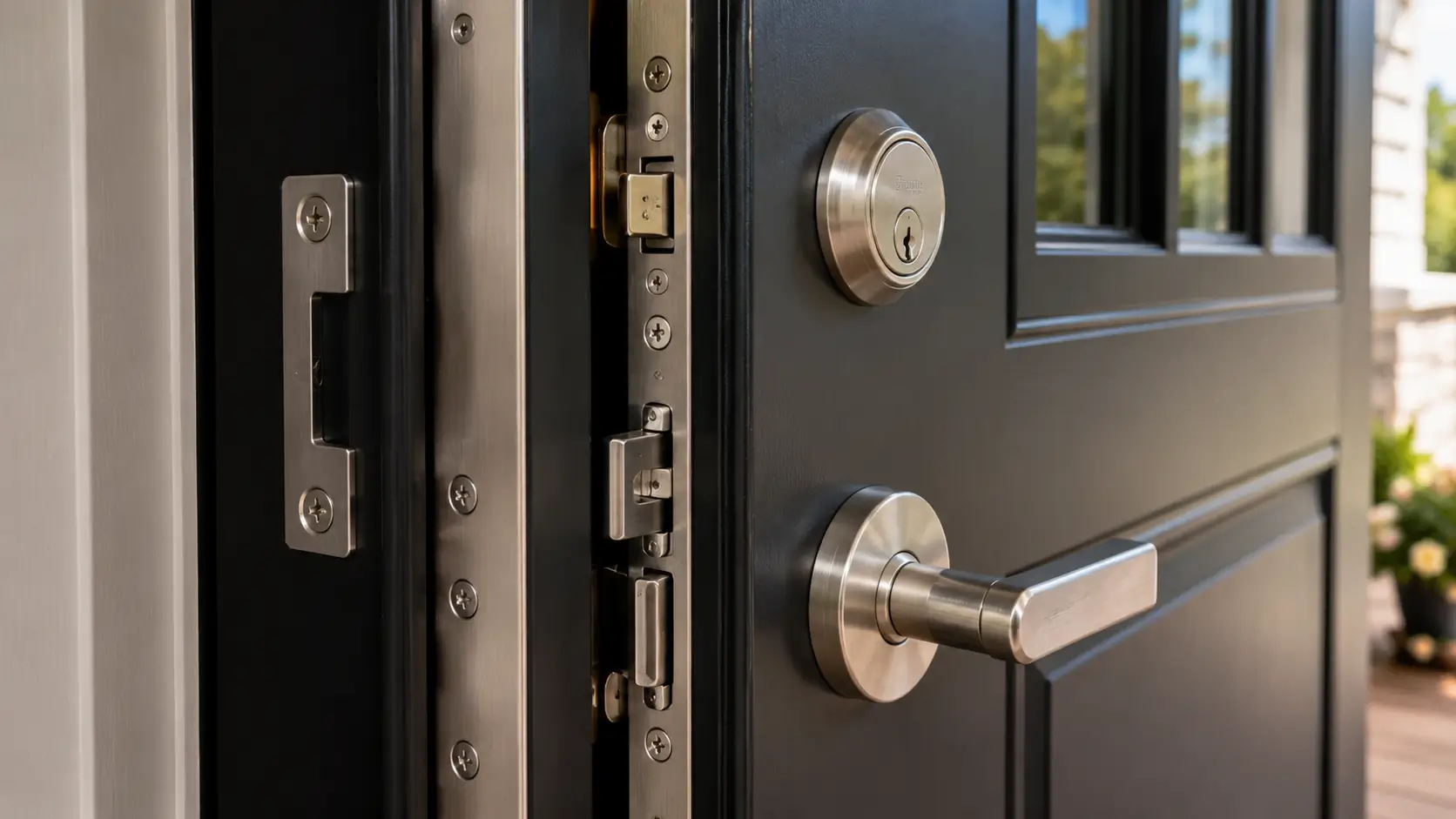
Multi-point locking systems represent the single most effective security upgrade available for exterior doors. Unlike standard single-latch locks that engage the door frame at one location, multi-point systems engage 3-5 points simultaneously when you turn the key or handle—typically at top, middle, and bottom locations along the door’s latch edge.
This distributed engagement prevents door bowing under force and requires attackers to simultaneously compromise multiple lock points. Testing shows multi-point systems withstand 3-5 times more force before failure compared to single-point locks. They also prevent common bypass techniques like credit-card shimming or frame spreading that defeat standard locks.
Multi-point locks became standard on European doors decades ago and have gained significant market share in the United States over the past 10 years. They add $200-$500 to door costs but deliver security value far exceeding the premium. Most manufacturers integrate multi-point systems during door fabrication rather than retrofitting—making new door installation the ideal time to upgrade. First Light’s secure exterior door installation options include multi-point locking configurations for clients prioritizing maximum security.
Modern multi-point systems operate smoothly with single-action locking—turn the handle or key once and all points engage simultaneously. This ease of use eliminates the excuse that complex security mechanisms are too inconvenient for daily use. Family members of all ages can secure the home properly without struggling with multiple locks or complicated procedures.
Deadbolt Grade and Installation Quality
Even homes with multi-point systems should include quality deadbolts providing redundant security. The American National Standards Institute (ANSI) and Builders Hardware Manufacturers Association (BHMA) rate deadbolts on three grades reflecting security testing performance.
Grade 1 deadbolts (highest security) must withstand 10 strikes of 75 pounds force, 800,000 open-close cycles, and 10 complete turns of manipulation resistance. These commercial-grade locks cost $100-$250 and provide security suitable for high-value homes or high-crime areas. Grade 2 deadbolts (residential quality) handle 5 strikes of 75 pounds and 400,000 cycles—adequate for most homes at $50-$120 price points. Grade 3 represents minimum acceptable quality but offers limited security value.
Installation quality matters as much as hardware grade. Deadbolts must extend fully into solid door frames—preferably 1 inch throw length minimum. Cheap installations mount strike plates with short screws that pull out easily. Professional installations use 3-inch screws penetrating wall studs, reinforced strike plates with box receptacles capturing the bolt completely, and proper frame alignment ensuring smooth operation without binding.
Replace deadbolts over 15-20 years old even if still functional. Internal components wear, key blanks become widely available making lock picking easier, and newer designs incorporate pick-resistant pins and drilling protection absent in older models. The modest cost of upgrading locks ($100-$300 professionally installed) provides security improvements without full door replacement when budgets constrain larger projects.
Reinforced Strike Plates and Door Frames
Door frames represent the weakest link in many residential security systems. Standard door frames use lightweight wood jambs attached to wall studs with minimal fasteners. When force hits a locked door, the strike plate (metal plate surrounding lock openings) tears out of the frame, allowing the door to swing open regardless of lock quality.
Reinforced strike plates extend 12-18 inches vertically rather than the standard 2-3 inches, distributing force over larger areas and more fastening points. Heavy-gauge steel construction (16-gauge or thicker) resists deformation. Box-style strike plates create recessed pockets that capture deadbolts completely rather than relying on surface-mount retention. Installation with 3-inch or longer screws penetrating through jamb and sheathing into wall studs transfers force to structural framing rather than cosmetic trim.
Some manufacturers offer complete steel frame systems replacing wood entirely. While expensive ($400-$800 additional), steel frames provide the ultimate security foundation particularly for homes in high-crime areas or holding significant valuables. Less expensive frame reinforcement kits ($80-$150) strengthen existing wood frames adequately for most residential applications when professionally installed.
Proper frame installation includes shimming the jamb solidly against wall studs at lock locations. Gaps between frame and structure allow frames to flex under force, enabling locks to tear out. Professional installers verify solid frame-to-stud contact and use expanding foam or solid blocking to eliminate voids. This attention to installation detail differentiates secure doors from those providing only the appearance of security.
Door Material Security Considerations
Door material selection significantly impacts security performance. While all materials can incorporate high-quality locks and reinforcements, their inherent structural characteristics create different security profiles.
Steel Doors: Maximum Security and Durability
Steel doors offer superior forced-entry resistance compared to all alternatives. Quality steel entry doors feature 24-gauge or thicker steel skins over solid cores (polyurethane foam, steel stiffeners, or composite materials) creating rigid structures that resist kicking, battering, and prying far better than wood or fiberglass alternatives.
Testing conducted by the Door and Hardware Institute demonstrates steel doors withstand 10-15 times more impact force before failure compared to standard wood doors. The steel skin prevents drilling attacks on lock cylinders—attackers cannot easily access internal mechanisms. Steel’s rigidity also maintains frame alignment over decades, preventing the warping that creates gaps where pry bars can gain purchase.
Modern steel doors overcome the aesthetic limitations of older commercial-style models. Embossed wood-grain patterns, powder-coat finishes in dozens of colors, and decorative glass options create appearances indistinguishable from premium wood doors. Maintenance remains minimal—no painting, sealing, or refinishing required. Steel performs consistently in Massachusetts’ temperature extremes without expanding, contracting, or degrading.
The primary steel door limitation involves denting from impact—a baseball or kicked bicycle can create cosmetic damage that doesn’t compromise security but affects appearance. Higher-gauge steel (lower numbers = thicker material) resists denting better but adds cost and weight. For homeowners prioritizing maximum security in high-risk areas or homes storing valuable collections, steel represents the optimal choice balancing protection, durability, and reasonable cost. Our security-focused door options include steel configurations rated for commercial security applications.
Fiberglass Doors: Strength Without Compromise
Fiberglass doors deliver security performance approaching steel while offering superior weather resistance and aesthetic flexibility. Quality fiberglass entry doors feature composite fiberglass skins over solid polyurethane or engineered wood cores creating structures that resist forced entry effectively while maintaining the appearance of natural wood.
Fiberglass will not rust, rot, split, or warp regardless of moisture exposure. This dimensional stability ensures consistent lock alignment and frame fit over decades—critical for security since gaps enable bypass techniques. The material’s inherent strength resists kicking and battering comparably to steel while avoiding denting issues. Fiberglass also provides superior insulation values reducing energy costs beyond security benefits.
From an appearance standpoint, fiberglass surpasses all alternatives. Modern manufacturing creates wood-grain textures so realistic that only close tactile inspection reveals the difference from genuine wood. Fiberglass accepts stain and paint identically to wood, enabling unlimited color and finish options. Homeowners achieve the classic beauty of wood entry doors without security compromises or maintenance demands.
Premium fiberglass doors cost 15-25% more than comparable steel options but justify the premium through extended lifespan (40+ years typical), zero maintenance requirements, and superior weather performance in coastal Massachusetts locations. For homes where aesthetics matter equally to security, fiberglass represents the ideal balance. The material’s strength allows integration of multi-point locking systems and heavy-duty hardware without structural concerns present in wood doors.
Wood Doors: Classic Beauty with Proper Reinforcement
Solid wood doors provide timeless architectural beauty and remain popular for historical homes, luxury properties, and homeowners prioritizing traditional aesthetics. However, wood presents inherent security challenges requiring specific reinforcements to achieve adequate protection levels.
Standard wood doors split along grain lines under impact, enabling breaches without fully defeating lock mechanisms. Solid-core construction (vs. hollow-core) provides baseline security, but species selection matters significantly. Mahogany, oak, and other hardwoods resist splitting and drilling better than softwoods like pine or fir. Minimum 1.75-inch thickness (preferably 2 inches) ensures adequate strength for supporting heavy-duty hardware and resisting battering.
Wood door security requires professional reinforcement at lock locations. Steel plates embedded into the door core around lock and deadbolt cylinders prevent drilling attacks and strengthen the area resisting maximum force. Extended strike plate mortises distributing stress across wider areas prevent splitting. Some manufacturers offer wood doors with concealed steel frames providing composite strength while maintaining exterior wood aesthetics.
Wood’s primary security limitation involves weather-related degradation. Moisture absorption causes swelling and warping that creates frame gaps or binding. Repeated freeze-thaw cycles stress wood fibers potentially creating cracks that compromise structural integrity. Preventing these issues requires religious maintenance—annual sealing, refinishing every 3-5 years, and immediate repair of any finish breaches protecting raw wood.
For homeowners willing to commit to ongoing maintenance and willing to invest in proper reinforcements ($300-$600 beyond baseline door cost), wood doors can achieve security levels comparable to steel or fiberglass. However, most security-conscious homeowners find fiberglass provides wood’s aesthetics without maintenance burdens or weather vulnerabilities. Wood makes sense primarily when historical accuracy demands it or when personal aesthetic preferences strongly outweigh practical security considerations.
Glass Panel Security in Entry Doors
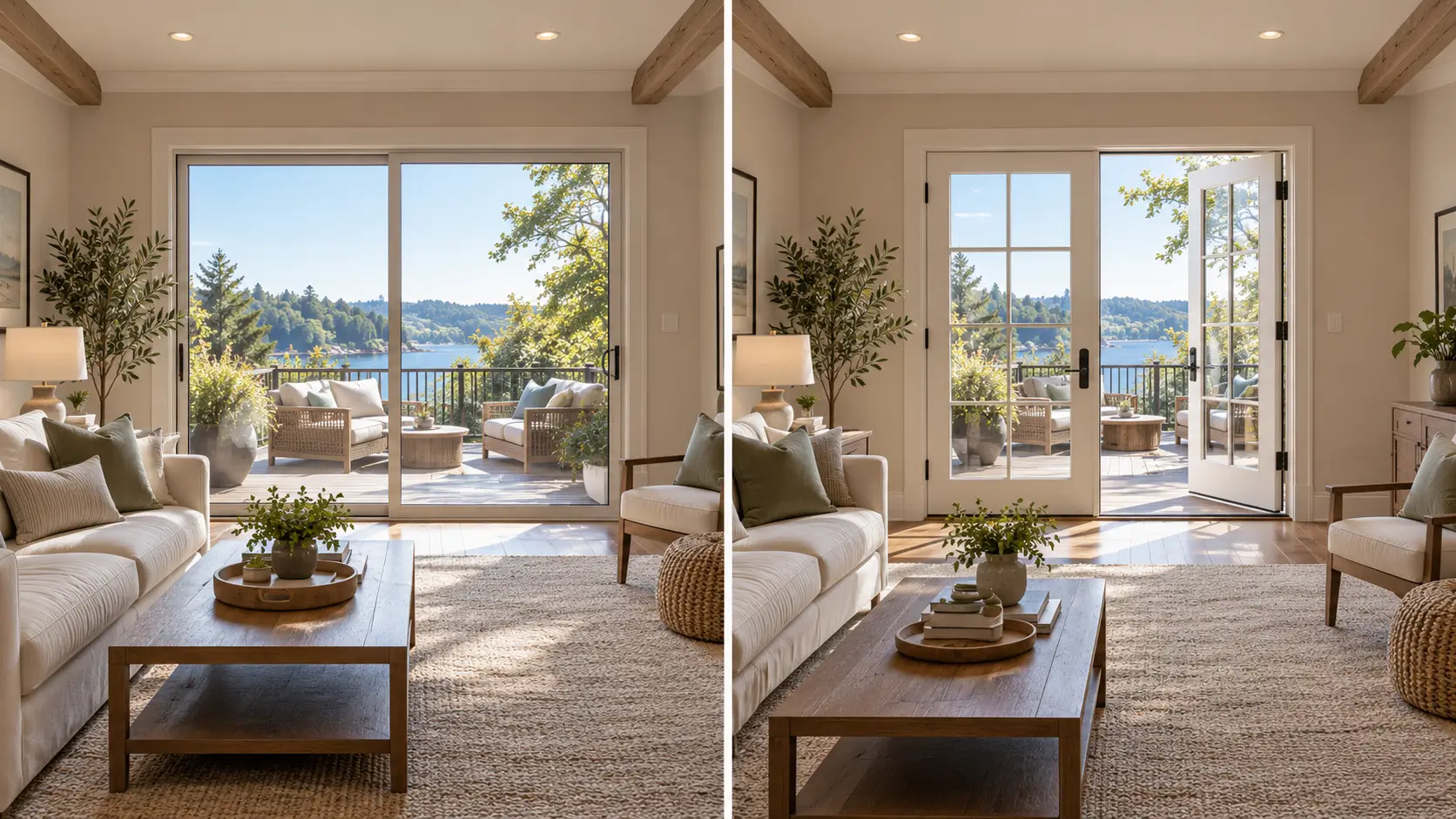
Many homeowners desire glass panels (door lites or sidelights) for natural light and aesthetic appeal but worry about security compromises. Understanding glass security options and proper placement allows you to enjoy glass benefits without creating vulnerabilities.
Glass type dramatically affects security. Standard annealed glass breaks easily into large, sharp shards providing quick access. Tempered glass shatters into small, relatively harmless pieces but still allows entry. Laminated glass—two glass sheets bonded to a plastic interlayer—provides genuine security. Even when broken, the plastic layer holds fragments together preventing entry. Attackers must repeatedly strike laminated glass to create openings, generating noise and time that deter most intrusions.
Glass placement relative to locks determines vulnerability. Building codes require glass positioned within 40 inches of deadbolts to be tempered or laminated for safety, but security-conscious homeowners should use laminated glass for all door glazing within 6 feet of locks. Position sidelights and door lites away from lock mechanisms whenever possible—at least 40 inches separation prevents reaching through broken glass to unlock from inside.
Decorative grilles between glass panes add minor security value by creating obstacles but should not be considered primary protection. Surface-mounted grilles offer no security—they remove easily. Even integral grilles between glass layers slow but don’t prevent determined attackers. View them as aesthetic features that slightly complicate access rather than genuine security elements.
Some homeowners install security film over existing glass panels as a retrofit solution. Quality films (8-mil thickness or greater) hold shattered glass together similarly to laminated glass at lower cost ($8-15 per square foot professionally installed vs. $150-300 per laminated glass panel replacement). Films provide reasonable security upgrade for existing doors where glass replacement isn’t feasible, though laminated glass remains superior for new installations.
Consider glass panel size carefully. Large uninterrupted glass areas create bigger potential openings if breached. Multiple smaller lites separated by substantial door material require attackers to create multiple breach points rather than one large opening. From both security and traditional design perspectives, smaller divided lites often provide better solutions than single large glass panels.
Smart Lock Integration and Modern Security Technology
Smart lock technology has matured significantly over the past decade, now offering genuine security benefits beyond convenience. Understanding smart lock capabilities and limitations helps you decide whether this technology suits your security needs.
Quality smart locks from manufacturers like August, Schlage, Yale, and Kwikset meet ANSI Grade 2 security standards matching traditional high-security locks. They resist picking, bumping, and drilling using the same hardened cylinders and anti-tamper features as conventional deadbolts. The digital components add functionality without compromising physical security.
Smart lock advantages include keyless entry eliminating lost key vulnerabilities, automatic locking ensuring doors never accidentally remain unsecured, temporary access codes for service providers or guests avoiding physical key distribution, and activity logs showing exactly when doors lock/unlock and by whom. Remote locking via smartphone allows you to secure doors forgotten during rushed departures. Integration with home security systems, cameras, and automation creates comprehensive security ecosystems.
However, smart locks introduce potential cyber vulnerabilities absent in mechanical locks. Choose models with encrypted Bluetooth or Z-Wave communication rather than Wi-Fi-direct connections vulnerable to hacking. Enable two-factor authentication preventing unauthorized app access. Set automatic lockout features disabling locks after multiple failed code attempts. Keep firmware updated to patch discovered security flaws—manufacturers regularly release updates addressing newly identified vulnerabilities.
Battery dependence requires monitoring and backup plans. Most smart locks signal low battery weeks before failure and include emergency mechanical key overrides. Some models offer hardwired power options eliminating battery concerns. Budget for battery replacement 1-2 times annually ($20-40) as routine maintenance.
Smart locks work best as components within comprehensive security systems rather than standalone solutions. Pair them with video doorbells providing visual verification before granting access, integrate with alarm systems for immediate intrusion alerts, and combine with exterior lighting triggered by approach sensors. This layered approach leverages smart technology strengths while compensating for weaknesses through redundant traditional security measures.
For tech-comfortable homeowners who value convenience and monitoring capabilities, modern smart locks provide security equivalent to traditional high-quality deadbolts plus significant usability advantages. For those preferring simple mechanical reliability without connectivity concerns, traditional Grade 1 deadbolts remain excellent choices. Both approaches deliver adequate security when properly installed and integrated with quality doors and frames. When you’re ready to discuss security options tailored to your specific home and needs, schedule a security assessment with our experienced team.
Frequently Asked Questions
What is the most secure type of exterior door?
Steel doors offer maximum security due to their solid core construction and resistance to forced entry. Quality steel doors withstand 10-15 times more force than standard wood doors before failing. However, fiberglass doors with solid cores provide comparable security while offering superior weather resistance and aesthetic flexibility. Both significantly outperform hollow-core or low-quality wood doors in security testing.
How important is a deadbolt on an exterior door?
Deadbolts provide essential secondary locking that dramatically increases forced-entry resistance. Grade 1 deadbolts (ANSI/BHMA highest rating) withstand 10 strikes of 75 pounds force and require 10 full turns to bypass—making unauthorized entry extremely difficult and time-consuming. Every exterior door should have a minimum Grade 2 deadbolt, with Grade 1 recommended for maximum security.
What are multi-point locking systems and are they worth it?
Multi-point locks engage the door frame at 3-5 locations simultaneously (top, bottom, middle, and/or sides) rather than just the single latch point of standard locks. They distribute force across the entire door perimeter, prevent door bowing, and require simultaneous compromise of multiple lock points for entry. While adding $200-$500 to door costs, they provide exceptional security particularly for high-value homes.
Should exterior doors have glass panels?
Glass panels (sidelights, door lites) enhance aesthetics and natural light but require security considerations. Tempered or laminated glass resists breaking better than standard glass. Position glass panels away from lock mechanisms—at least 40 inches prevents reaching through broken glass to unlock from inside. Decorative grilles between glass panes add minor deterrent value but primarily serve aesthetic purposes.
How does door frame strength affect security?
Door frame strength matters as much as door and lock quality—weak frames allow doors to be kicked in regardless of lock quality. Solid wood or steel door frames, reinforced strike plates with 3-inch screws penetrating wall studs, and proper frame-to-wall anchoring create a security system where each component supports the others. Upgrading frames during door replacement maximizes security investment.
Are smart locks as secure as traditional deadbolts?
Quality smart locks (August, Schlage Encode, Yale Assure) meet or exceed Grade 2 ANSI security standards while adding convenience and monitoring capabilities. They resist picking and bumping like traditional high-security locks. However, they introduce potential cyber vulnerabilities—choose models with encrypted communication, two-factor authentication, and automatic lockout after failed attempts. Professional installation ensures proper physical and digital security configuration.
What security upgrades can I add to existing exterior doors?
Cost-effective security upgrades for existing doors include: upgrading to Grade 1 deadbolts ($100-$200), installing reinforced strike plates with 3-inch screws ($30-$60), adding door security bars or floor-mounted locks ($50-$150), installing wide-angle peepholes or door cameras ($50-$300), and applying security film to glass panels ($8-$15 per square foot). Complete door replacement provides greatest security improvement for doors over 15 years old.