Trim work represents the finishing touch that transforms bare rooms into polished, complete spaces—yet pricing for this essential service remains frustratingly opaque for most Massachusetts homeowners. Whether you’re completing new construction, updating outdated trim, or repairing damaged moldings, understanding realistic cost expectations helps you budget appropriately and avoid the all-too-common scenario of surprise expenses derailing home improvement projects.
With over 20 years in construction and deep expertise in finish carpentry, First Light Windows and Doors has installed trim in hundreds of Massachusetts homes across every price point and style preference. This guide breaks down real Massachusetts trim installation costs, explains the factors driving pricing variations, and helps you make informed decisions balancing budget constraints against quality expectations.
Trim installation costs vary dramatically based on material selection, profile complexity, project scope, and craftsman expertise. A basic bedroom baseboard installation might cost $300-$500 while an elaborate whole-home crown molding project could reach $8,000-$15,000. Understanding these ranges and the variables influencing where your project falls within them puts you in control of the planning process. Let’s examine what trim installation actually costs in Massachusetts and what you receive for your investment.
Summary:
- Average Trim Installation Costs in Massachusetts
- Interior Trim Installation Pricing
- Exterior Trim Installation Pricing
- Labor Costs for Trim Carpentry in Massachusetts
- Factors That Affect Trim Installation Costs
- Material Selection and Quality
- Trim Profile Complexity and Customization
- Project Scope and Room Count
- Interior vs. Exterior Trim: Cost Differences
- When to Replace Trim vs. Repair
- How to Budget for Quality Trim Installation
- FAQ
Average Trim Installation Costs in Massachusetts
Trim installation pricing divides into material costs and labor costs, with each varying significantly based on quality tier and application complexity. Massachusetts pricing tends 10-15% higher than national averages due to skilled labor demand and cost-of-living factors in the region.
Interior Trim Installation Pricing
Interior baseboards represent the most common trim installation, averaging $4-$8 per linear foot installed for standard painted pine profiles. A typical 12×14 bedroom requiring 52 linear feet of baseboard costs $200-$400 including materials and labor. Upgrading to stained oak or maple baseboards increases costs to $8-$15 per linear foot, bringing the same room to $400-$780.
Door and window casing installation runs $3-$7 per linear foot for basic profiles, with an average door requiring 16-20 linear feet ($50-$140 per opening). Window casing varies by window size but typically costs $40-$100 per window for standard double-hung units. Crown molding, the most complex interior trim application, ranges from $6-$12 per linear foot for painted profiles up to $15-$25 per linear foot for stained hardwood or complex multi-piece buildups.
Whole-room trim packages bundling baseboards, door/window casing, and crown molding typically cost $800-$2,500 for average-sized rooms (12×14 to 15×18). Living rooms, dining rooms, and master suites at the upper end while bedrooms and offices fall toward lower ranges. These packages often deliver 15-20% savings compared to pricing each element separately due to workflow efficiencies.
Chair rails and wainscoting add $5-$12 per linear foot depending on material and complexity. Simple applied chair rails cost less while full wainscoting panels with cap and base moldings reach the upper range. Coffered ceiling installations, picture frame wall applications, and other decorative millwork treatments price as custom projects typically starting at $2,000 and scaling with complexity and room size. Our professional trim installation services include consultation on profile selection balancing aesthetic preferences with budget realities.
Exterior Trim Installation Pricing
Exterior trim faces weather exposure requiring more durable materials and weatherproofing steps that increase costs compared to interior applications. PVC and composite trim materials dominate exterior installations due to superior weather resistance and minimal maintenance requirements.
Window and door exterior casing averages $6-$12 per linear foot installed for cellular PVC materials. A standard 3×5 window requires approximately 18 linear feet of casing ($110-$215 per window). Entry doors with sidelights might need 30-40 linear feet ($180-$480 per door unit). Corner boards, frieze boards, and other exterior trim elements run $8-$18 per linear foot depending on width and material quality.
Soffit and fascia trim replacement costs $8-$15 per linear foot including removal of deteriorated materials. A typical single-story home with 150 linear feet of fascia costs $1,200-$2,250 for complete replacement. Adding matching soffit panels increases total costs to $2,400-$4,500 for comprehensive eave trim renewal. These projects often coordinate with window replacement or siding installation for workflow efficiency and aesthetic consistency.
Decorative exterior trim elements like gable ornaments, brackets, or custom profiles price individually based on complexity—ranging from $150-$800 per element installed. Historical reproduction trim for period homes commands premium pricing ($15-$35 per linear foot) due to custom milling requirements and specialized installation expertise. When planning comprehensive exterior upgrades, explore our trim options in Beverly showcasing both standard and custom applications.
Labor Costs for Trim Carpentry in Massachusetts
Labor represents 50-70% of total trim installation costs, with Massachusetts carpenter rates reflecting regional cost-of-living and skilled tradesperson demand. Professional trim carpenters charge $65-$95 per hour for standard installations, with highly experienced specialists commanding $85-$110 per hour for complex custom work requiring advanced techniques.
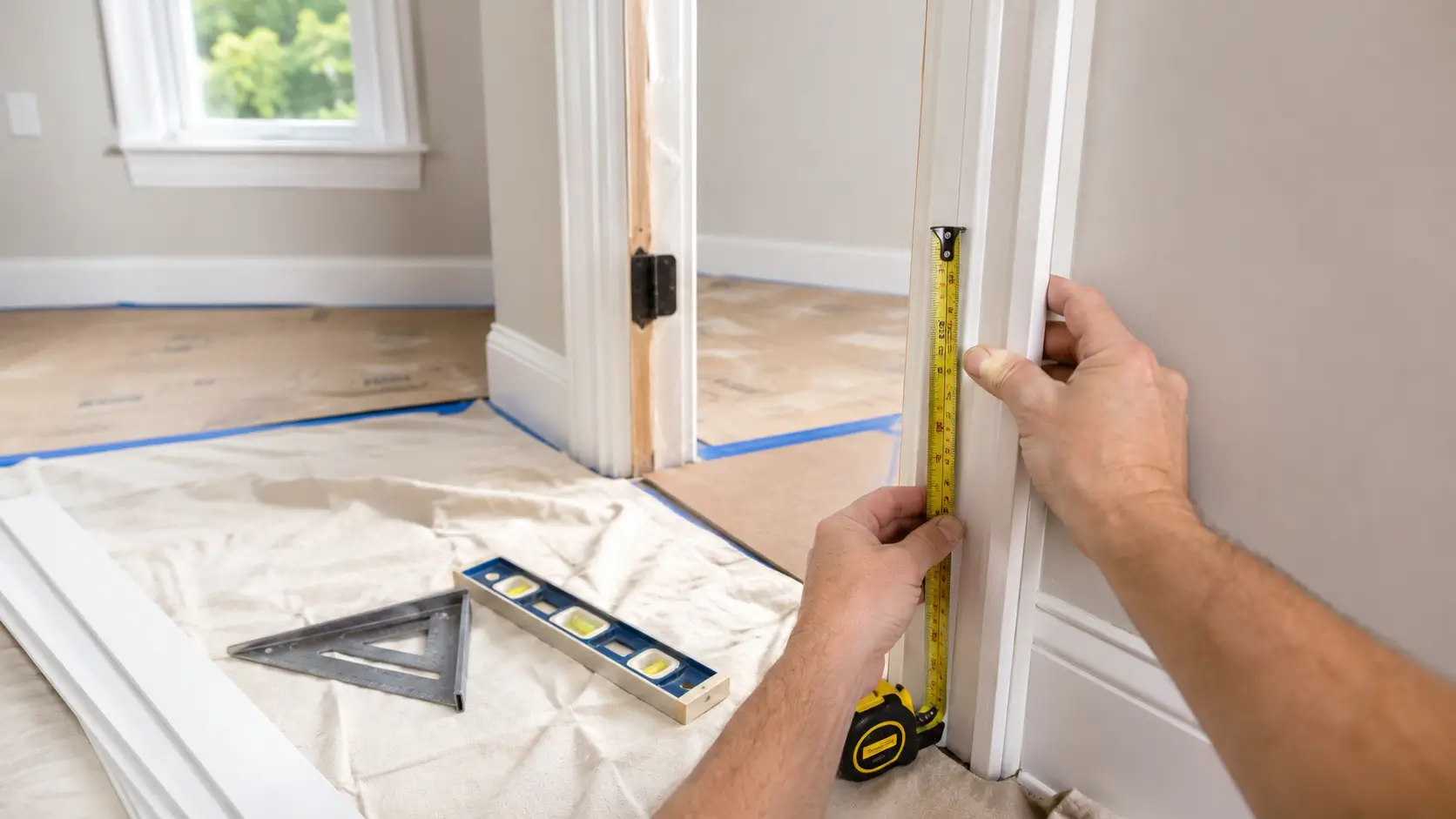
Installation speed varies significantly by profile complexity and carpenter skill. Efficient professionals install 6-10 linear feet per hour of standard baseboards or casing, slowing to 4-6 feet per hour for crown molding or complex multi-piece buildups. A 200-square-foot room requiring 60 linear feet of baseboard takes an experienced carpenter 6-10 hours including measuring, cutting, fitting, installation, and caulking—translating to $400-$950 in labor costs alone.
Some contractors quote trim installation by linear foot ($3-$8 labor only, materials separate) or per-room flat rates ($400-$1,200 depending on scope). These pricing models simplify estimates but require careful specification of what’s included—does it cover old trim removal, wall repairs, caulking, painting prep? Always clarify scope completely before committing to avoid surprise charges mid-project.
Regional variations within Massachusetts affect labor costs moderately. Boston metro area and affluent North Shore communities command premium rates (10-20% above state averages) while Central and Western Massachusetts run slightly below. However, material costs remain consistent statewide—differences primarily reflect labor market dynamics rather than fundamental cost-of-doing-business variations.
Factors That Affect Trim Installation Costs
Understanding the variables driving trim costs helps you make strategic decisions optimizing value for your specific priorities and budget constraints. Not all cost drivers deliver equivalent value—identifying which factors matter most for your situation prevents overspending on irrelevant upgrades while ensuring adequate investment in critical elements.
Material Selection and Quality
Trim material selection creates the widest cost variation in projects. Basic finger-jointed pine primed for painting represents the most economical option at $0.80-$1.50 per linear foot for standard baseboards, $1.20-$2.50 for casing, and $2-$4 for crown molding. This construction-grade material works perfectly well for painted applications but shows joints and imperfections requiring careful finishing.
Solid pine or poplar upgrades improve appearance and durability at $1.50-$3 per linear foot (baseboards), $2.50-$5 (casing), and $4-$8 (crown molding). These natural woods accept paint or stain and contain fewer defects than finger-jointed alternatives. For stained applications showcasing wood grain, oak remains the most popular choice at $3-$6 (baseboards), $5-$10 (casing), and $8-$15 (crown molding). Maple, cherry, and other premium hardwoods add 30-50% to oak pricing.
Exterior applications demand weather-resistant materials. Cellular PVC costs $2.50-$5 per linear foot for standard profiles, never rots or splits, and maintains dimensional stability through Massachusetts temperature extremes. Composite materials (wood fiber and polymer blends) run $2-$4 per linear foot and offer wood-like appearance with improved weather resistance. Both outlast wood indefinitely and eliminate ongoing painting maintenance though initial costs exceed wood by 40-60%.
MDF (medium-density fiberboard) provides smooth, defect-free surfaces ideal for painted interior applications at costs between finger-jointed pine and solid wood. However, MDF swells and disintegrates when exposed to moisture—avoid in bathrooms, kitchens, basements, or any exterior application. For purely aesthetic painted trim in dry locations, MDF delivers excellent value.
Trim Profile Complexity and Customization
Simple, flat trim profiles cost less to produce and install than complex traditional profiles with multiple curves, reveals, and decorative elements. A basic colonial casing costs $1.50-$3 per linear foot while an ornate Victorian profile with multiple beads and contours runs $4-$8 per linear foot for the same wood species.
Crown molding complexity dramatically affects costs. Simple cove or bed molding installs quickly at standard labor rates. Multi-piece crown buildups combining multiple profiles (crown, bed molding, backer boards) for dramatic 6-8 inch projection require specialized skills and double or triple installation time—translating to significantly higher labor costs even if material costs increase modestly.
Custom milling for reproduction trim matching historical profiles or unique architectural requirements adds $8-$25 per linear foot to material costs depending on complexity. Short production runs (under 200 linear feet) pay setup fees making custom work impractical for small projects. However, for whole-home historical restoration or distinctive architectural expressions, custom profiles deliver irreplaceable character justifying premium costs.
Prefinished trim eliminates on-site painting requirements but costs 30-50% more than raw materials. This premium often justifies itself through faster installation, professional factory finishing superior to field-applied paint, and eliminated painting contractor costs. Calculate total project cost including finishing before dismissing prefinished materials as too expensive—they frequently deliver better value despite higher material prices.
Project Scope and Room Count
Project scale significantly impacts per-unit costs through efficiency gains and material purchasing leverage. Installing trim in a single room requires full tool mobilization, material delivery, and setup for limited square footage—resulting in higher per-linear-foot effective costs. Whole-home projects spread fixed costs across larger footage, reducing per-unit expenses 20-35%.
Material bulk purchasing for large projects delivers 10-20% discounts on quality materials—savings passed to clients by professional contractors. However, very large projects (whole-home renovations, multi-unit properties) may require extended timelines that offset some efficiency gains through prolonged project management overhead.
Coordination with other trades affects costs both positively and negatively. Installing trim as part of comprehensive renovations including drywall, painting, and flooring creates workflow synergies reducing total costs. However, coordinating multiple contractors and managing sequential dependencies adds complexity potentially increasing overall project budgets despite individual trade efficiencies.
Old trim removal and disposal adds $1-$3 per linear foot when existing trim must come out before new installation. Damaged drywall behind old trim requiring repair adds another $2-$6 per linear foot depending on damage severity. These costs often surprise homeowners expecting simple overlay installations—professional contractors identify these needs during initial assessments providing accurate comprehensive quotes rather than low-ball estimates that balloon during execution.
Interior vs. Exterior Trim: Cost Differences
Interior and exterior trim serve similar aesthetic functions but differ substantially in material requirements, installation complexity, and pricing. Understanding these distinctions helps you budget appropriately for each application.
Interior trim prioritizes aesthetics and finish quality over weather resistance. Materials span economical painted pine to exotic hardwoods depending on budget and design intent. Installation focuses on precise joints, smooth transitions, and flawless finishing. Climate control during installation ensures proper fit and paint curing. Labor costs reflect finish carpentry skills rather than weatherproofing expertise.
Exterior trim demands weather-resistant materials that endure Massachusetts’ temperature extremes, moisture exposure, and UV degradation without rotting, splitting, or requiring constant maintenance. PVC and composite materials dominate modern exterior applications despite higher material costs because they eliminate ongoing painting and maintenance expenses. Installation includes weatherproofing steps—caulking, flashing integration, proper drainage detailing—absent in interior work.
Labor rates for exterior trim run 15-25% higher than interior applications reflecting additional weatherproofing requirements and exposure to outdoor working conditions. Exterior projects also face weather-related scheduling constraints that can extend timelines and increase costs when rain, extreme cold, or high winds force work stoppages.
From a value perspective, exterior trim investments deliver long-term returns through reduced maintenance costs and improved home protection. Quality exterior trim prevents water infiltration that damages sheathing, insulation, and structural framing—expensive problems vastly exceeding trim material cost savings. Interior trim delivers aesthetic and resale value but doesn’t protect structural integrity the same way exterior trim does.
Budget allocation between interior and exterior trim depends on immediate needs and long-term priorities. If exterior trim shows deterioration allowing water infiltration, address it before cosmetic interior upgrades—water damage escalates quickly and costs exponentially more to remediate than prevent. If both interior and exterior trim function adequately but appear dated, prioritize based on which delivers greater personal satisfaction and resale value for your specific property and market.
When to Replace Trim vs. Repair
Not all trim issues require complete replacement. Understanding when repair suffices versus when replacement becomes necessary helps you avoid unnecessary expenses while preventing false economy of repeated repairs to deteriorated materials.
For interior trim, repair makes sense when damage remains localized to small sections—a single dinged baseboard corner, isolated nail pops, or finish damage from furniture contact. Fill nail holes and minor dings with wood filler ($5-10), sand smooth, and touch up paint or stain. This approach costs minimal time and money while maintaining existing aesthetics.
Replace interior trim when wood shows widespread splitting, warping makes reinstallation after painting impossible, water damage creates soft spots or mold, or when updating to different profile styles for aesthetic renovation. Attempting to repair structurally compromised trim rarely succeeds long-term—new material costs relatively little compared to repeated failed repair attempts.
Exterior trim demands replacement rather than repair more frequently due to weather exposure. Surface rot, even if affecting only outer 1/8 inch, indicates deeper moisture infiltration that will continue progressing. Splits, cracks, or separating joints allow water entry damaging building envelope—patch repairs fail within 1-2 seasons. Warped or twisted exterior trim creates gaps impossible to close with caulking alone.
The “50% rule” provides practical guidance: if repairs would cost more than 50% of complete replacement, or if damaged areas exceed 50% of total trim, replacement delivers better long-term value. This calculation should include labor for both repair and replacement options—repairs often require comparable labor to replacement while delivering inferior long-term results.
Consider future plans when deciding repair versus replacement. If you’ll sell within 2-3 years, repairs sufficient to present well during showings may make financial sense. If you’re staying 5+ years, replacement prevents repeated maintenance cycles and delivers better daily satisfaction. When planning trim work alongside window or door replacement, coordinate installations—First Light commonly packages window/door installations with complementary trim work for aesthetic consistency and workflow efficiency. When ready to discuss your specific situation, request a trim installation quote for professional assessment and recommendations.
How to Budget for Quality Trim Installation
Trim installation represents a finishing investment that significantly impacts your home’s appearance and perceived value. Budgeting appropriately ensures quality results without overspending on unnecessary upgrades or compromising on essential elements.
Start by prioritizing rooms based on visibility and use frequency. Living rooms, dining rooms, entryways, and master bedrooms merit higher investment in materials and craftsmanship than utility rooms, closets, or guest bedrooms. This tiered approach maximizes impact of limited budgets while ensuring whole-home completion.
Allocate 60-70% of budget to high-visibility public spaces, 20-25% to private spaces (bedrooms, bathrooms), and 10-15% to utility spaces (laundry, mechanical rooms, closets). Within each category, invest proportionally more in materials that show prominently—baseboards and crown molding dominate visual impact while door casings, though necessary, attract less attention.
For whole-home projects, budget $3,000-$8,000 for basic painted trim in average 1,500-2,000 square foot homes, $6,000-$15,000 for mid-range materials with some stained elements, and $12,000-$25,000+ for premium hardwoods or extensive custom millwork. These ranges assume standard ceiling heights (8-9 feet) and typical door/window counts—cathedral ceilings, numerous openings, or complex architectural details increase costs proportionally.
Exterior trim budgets depend heavily on condition of existing materials. Simple repair or spot replacement runs $800-$2,500 for typical homes. Complete exterior trim replacement including soffits, fascia, window/door casings, and corner boards costs $4,000-$12,000 depending on home size and material selection. These figures assume standard one-to-two story construction—three-story homes or complex rooflines increase costs through scaffolding requirements and access challenges.
Request detailed written estimates from multiple contractors specifying exact materials (manufacturer, product line, profile), scope of work (removal, repair, installation, finishing prep), and payment schedule. Lowest bid rarely delivers best value—evaluate contractor experience, references, and detailed specifications alongside pricing. A mid-range bid from experienced craftsmen with strong references typically delivers superior results to budget bids from generalists or inexperienced contractors.
Budget an additional 10-20% contingency for unexpected issues—hidden damage behind old trim, wall repairs, or material substitutions when specified products become unavailable. This buffer prevents project delays or quality compromises when surprises emerge during execution.
Frequently Asked Questions
What is the average cost of trim installation in Massachusetts?
Interior trim installation in Massachusetts averages $4-$12 per linear foot including materials and labor, with basic pine baseboards at the lower end and premium hardwood crown molding at the upper range. Exterior trim costs $6-$18 per linear foot for PVC or composite materials including installation. Whole-room trim packages (baseboards, casing, crown) typically run $800-$2,500 depending on room size and material quality.
How much do trim carpenters charge in Massachusetts?
Professional trim carpenters in Massachusetts charge $65-$95 per hour for skilled craftsmanship, with experienced specialists commanding $85-$110 per hour for complex custom work. Some contractors quote by linear foot ($3-$8 labor only) or per room ($400-$1,200) depending on project scope. Hourly rates reflect expertise, efficiency, and regional demand—Boston metro commands premium rates while rural areas run 10-15% lower.
Is it cheaper to paint trim before or after installation?
Pre-painting trim before installation reduces total project cost by 15-25% through faster application, better coverage, and eliminated masking time. However, nail holes, caulking, and cut ends require touch-up after installation. For best results, prime and apply first coat pre-installation, then final coat and touch-ups post-installation. This hybrid approach balances efficiency with finish quality.
Should I replace all trim in my house at once?
Whole-home trim replacement delivers consistent aesthetics, potential bulk material discounts (10-20%), and reduced per-room labor costs through efficient workflow. However, phased room-by-room replacement remains practical for budget constraints or minimizing disruption. Prioritize high-visibility areas (living room, entryway), damaged sections, and rooms undergoing other renovations. Both approaches work—your budget and timeline determine optimal strategy.
How long does trim installation take?
Professional trim installation averages 6-10 linear feet per hour for standard profiles, meaning a typical room (60-80 linear feet total trim) takes 1-1.5 days including measuring, cutting, installation, and caulking. Complex crown molding or custom profiles slow progress to 4-6 feet per hour. Whole-home projects span 3-7 days depending on square footage, profile complexity, and existing trim removal needs.
What trim materials last longest in Massachusetts climate?
For exterior applications, cellular PVC and composite materials outlast wood indefinitely—50+ years without rot, split, or insect damage. They never require painting though can be painted for aesthetics. Interior applications favor hardwoods (oak, maple) lasting 50+ years or finger-jointed pine primed for painting offering 30-40 year lifespans at lower cost. MDF works well for painted applications in low-moisture areas but fails in bathrooms or basements.
Does trim installation require wall repair?
Removing old trim often reveals wall damage, outdated paint lines, or drywall imperfections requiring repair before new installation. Budget $2-$6 per linear foot for minor patching and sanding. Significant damage (water stains, large holes, settling cracks) adds $8-$15 per linear foot for drywall repair and finishing. Professional installers identify repair needs during initial assessment and include costs in comprehensive quotes.